Approved treatment — US FDA, September 2026 (adult superficial basal cell carcinoma); Europe, 2017 (basal cell carcinoma unsuitable for surgery) Source: randomised phase 3 trial paper (JAAD 2025) and European comparative phase 3 (BJD 2018)
Photodynamic therapy for basal cell carcinoma received US Food and Drug Administration (FDA) approval in September 2026. It is approved for adults with superficial basal cell carcinoma (a type that spreads thinly across the upper skin layer): a gel is applied to the skin and red light is shone on it to destroy cancer cells without surgery. In the phase 3 trial behind the approval, the target lesion cleared completely in 66% of treated patients.
What was newly approved?
The approved product is Ameluz from the German company Biofrontera. It is a skin gel containing 10% aminolevulinic acid (ALA) and is used with a dedicated red-light lamp (BF-RhodoLED). In the US the gel had been used only for actinic keratosis (a precancerous skin lesion caused by sun damage); the indication has now been extended to a skin cancer. The company describes it as the first photodynamic therapy approved in the US to treat a skin cancer.
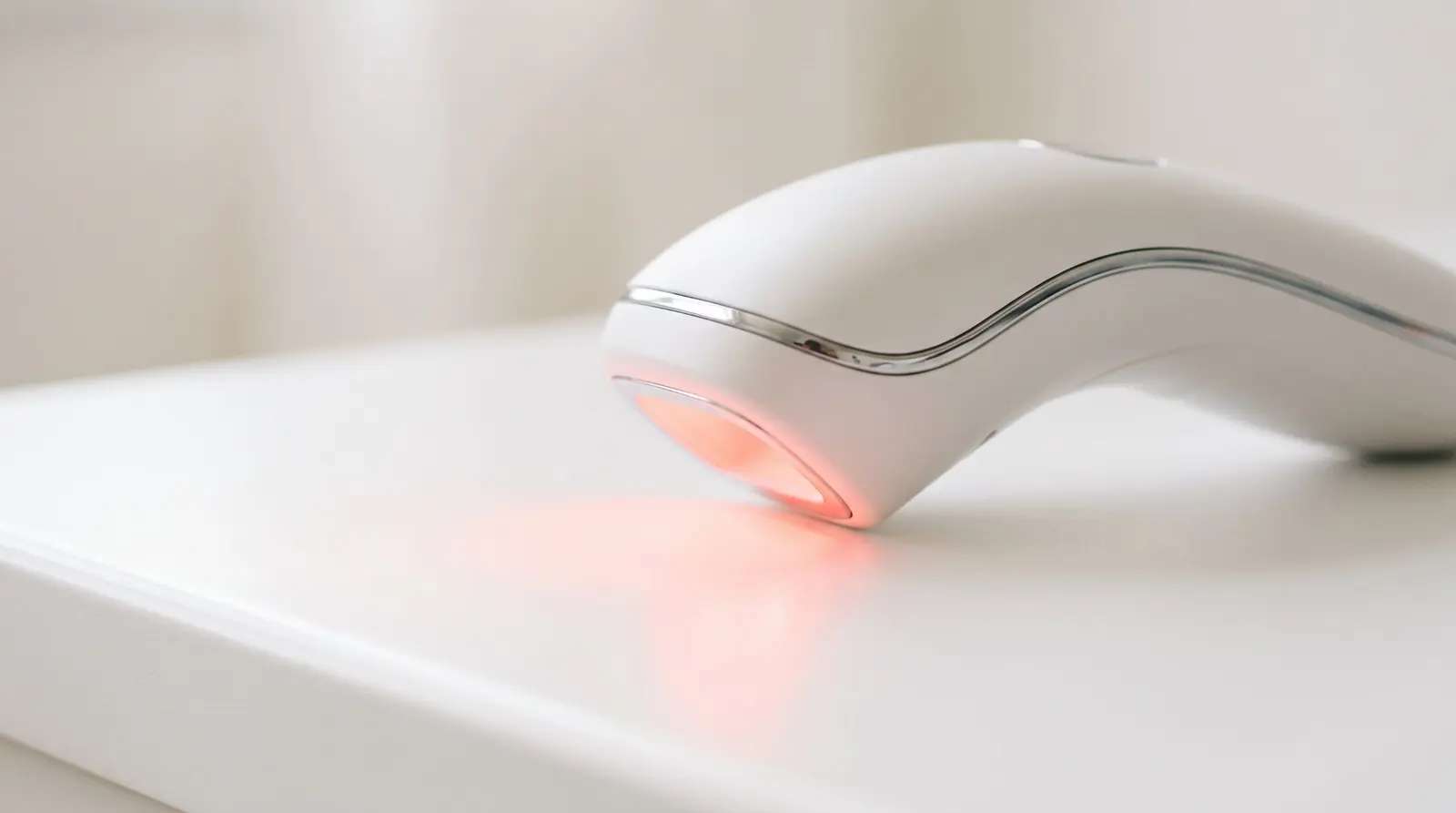
The idea behind photodynamic therapy (PDT) is simple. After the ALA in the gel is absorbed, it builds up inside fast-growing cancer cells and is converted into a light-sensitive substance. When red light is applied, reactive oxygen is produced and the cancer cells are damaged, while the surrounding normal skin is largely preserved. Because nothing is cut, scarring is a smaller concern.
The head and neck “photoimmunotherapy” covered on this site also uses light, but it is a different treatment in which an antibody-linked drug is injected. The differences are explained in Same “photoimmunotherapy” name, different treatments.
Which patients is it for?
Basal cell carcinoma starts in cells at the bottom of the outer skin layer and is the most common skin cancer in the United States. It rarely spreads to other organs, but if left alone it can grow into nearby tissue, so it needs treatment. The superficial type appears as thin, flat red patches, often several at once on the trunk, arms or legs.
The US approval covers adults with biopsy-confirmed superficial basal cell carcinoma. For people with many lesions that would each need surgery, or with lesions in places where scars matter, such as the face, it adds another in-office option besides surgery. According to a UK National Health Service (NHS) hospital leaflet, photodynamic therapy is not used for morpheaform basal cell carcinoma, which has unclear borders, or for people with porphyria, a metabolic condition causing light sensitivity. Deeper types such as nodular tumours are usually treated with surgery first, so the lesion type is checked first.
How good were the trial results?
The approval is based on a multicentre US phase 3 trial (ALA-BCC-CT013, NCT03573401). A total of 187 adults were randomised 4:1 to the real gel or a placebo (vehicle) gel, with the same light treatment, and neither patients nor doctors knew which gel was used. Patients received one or two treatments, and results were assessed 12 weeks after the last one. The paper was published in the Journal of the American Academy of Dermatology (JAAD) in 2025.
| Outcome (12 weeks after last treatment) | Ameluz PDT | Placebo gel + light |
|---|---|---|
| Complete response of target lesion (clinical + biopsy) | 65.5% (95 of 145) | 4.8% (2 of 42) |
| No cancer cells on biopsy | 75.9% | 19.0% |
| All treated lesions clinically cleared | 83.4% | 21.4% |
| Cosmetic result “very good or good” | 89.3% | 58.0% |
Source: JAAD 2025;93(6):1489-1498 and reports on the FDA approval. Figures are as published.
The gel has also shown strong results in Europe. In a European phase 3 trial published in the British Journal of Dermatology (BJD) in 2018, 281 patients with non-aggressive basal cell carcinoma received two treatments one week apart. At 12 weeks, lesion complete response was similarly high, at 93.4% with Ameluz and 91.8% with the established PDT cream (MAL), and recurrence 12 months later was 10% or less.
How is the treatment given, and what are the side effects?
Photodynamic therapy is done in a dermatology clinic without a hospital stay. Based on a UK NHS hospital leaflet (using a cream of the same type), the process is as follows.
- Preparation: crusts on the lesion are cleaned off, the medicine is applied to the lesion and a margin of normal skin, and a light-blocking dressing is placed for about three hours.
- Light: the dressing is removed and a red LED lamp is shone on each lesion for about 8–10 minutes. Tingling or burning is common; the light can be paused, a cool water spray can help, and a painkiller can be taken beforehand.
- Afterwards: the dressing stays on for 24–48 hours, and any crust falls off naturally within a few weeks. Superficial basal cell carcinoma is usually treated twice, one week apart, with a check 3–4 months later.
Side effects in the US phase 3 trial were mostly pain, redness, itching and swelling where the gel was applied. They were mild in 62.4%, moderate in 31.0% and severe in 6.2%; no patient stopped treatment because of them, and the most common symptoms usually settled within about a week.
Where is it available?
- United States: the FDA approved the supplemental indication (sNDA) in September 2026. The company plans to launch it between late Q4 2026 and Q1 2027.
- Europe: the European Medicines Agency (EMA) committee gave a positive opinion in December 2016, and since the 2017 EU approval it has been used for superficial and/or nodular basal cell carcinoma in adults when surgery is unsuitable because of possible treatment-related morbidity or poor cosmetic outcome.
- Japan and other countries: approved medicines and indications differ by country, so ask a local dermatologist which type of photodynamic therapy is available. Light-based treatment in Japan is covered in Photoimmunotherapy information and Glioblastoma photodynamic therapy.
Questions for your doctor
- Is my basal cell carcinoma superficial or nodular? Does my biopsy result make me suitable for photodynamic therapy?
- Which suits the location and number of my lesions: surgery, a cream, or photodynamic therapy?
- How many sessions will I need, and when and how (visual check or biopsy) will the result be confirmed?
- How long should I avoid sunlight afterwards, and how often will I be checked for recurrence?
Frequently asked questions
How effective is photodynamic therapy for basal cell carcinoma?
In the US phase 3 trial, the target lesion was cleared both clinically and on biopsy in 95 of 145 patients (65.5%) 12 weeks after the last treatment, and all treated lesions were clinically cleared in 83.4%. A European phase 3 trial reported lesion complete response of 93.4%.
Is photodynamic therapy painful?
Tingling or burning during the light treatment is common. Staff can pause the light or use a cool water spray, and discomfort usually eases within a few hours.
Does it leave a scar?
Because nothing is cut, scarring is less of a concern. In the US phase 3 trial, 89.3% of cosmetic results were rated “very good or good”. A light brown mark may remain at the treated site.
Can it be used for every basal cell carcinoma?
The US approval is for adult superficial basal cell carcinoma. In Europe it is approved for superficial and nodular basal cell carcinoma unsuitable for surgery. Other types, such as morpheaform, are usually considered for surgery or other treatments first.
Related: Head and neck cancer photoimmunotherapy results · Glioblastoma photodynamic therapy in Japan
Sources
- Dermatology Times. FDA Approves Ameluz Red-Light PDT for Superficial Basal Cell Carcinoma, 2026-09-14
dermatologytimes.com/view/fda-approves-ameluz-red-light-pdt-for-superficial-basal-cell-carcinoma
Checked: 2026-10-22 - Red light photodynamic therapy with 10% aminolevulinic acid gel showed efficacy for treatment of superficial basal cell carcinoma in a randomized, vehicle controlled, double-blind, multicenter phase III study. J Am Acad Dermatol 2025;93(6):1489-1498. DOI 10.1016/j.jaad.2025.08.031
doi.org/10.1016/j.jaad.2025.08.031
Checked: 2026-10-22 - ClinicalTrials.gov NCT03573401. Study to Evaluate the Safety and Efficacy of BF-200 ALA (Ameluz) and BF-RhodoLED in the Treatment of Superficial Basal Cell Carcinoma
clinicaltrials.gov/study/NCT03573401
Checked: 2026-10-22 - ESMO Oncology News. EMA Adopts a New Indication for 5-Aminolevulinic Acid (Ameluz, basal cell carcinoma), 2016-12
esmo.org/Oncology-News/EMA-Adopts-a-New-Indication-for-5-Aminolevulinic-Acid
Checked: 2026-10-22 - Morton CA et al. A randomized, multi-national, non-inferiority, phase III trial to evaluate the safety and efficacy of BF-200 ALA gel versus MAL cream in the treatment of non-aggressive basal cell carcinoma with photodynamic therapy. Br J Dermatol 2018;179(2):309-319. DOI 10.1111/bjd.16441
doi.org/10.1111/bjd.16441
Checked: 2026-10-22 - Cambridge University Hospitals NHS. Red light photodynamic therapy (Red light PDT) — patient information
cuh.nhs.uk/patient-information/red-light-photodynamic-therapy-red-light-pdt
Checked: 2026-10-22
Written by the FTH editorial team. Sources checked 2026-10-22 · Medical review: not applicable
This article is general information based on public sources and does not replace diagnosis or treatment. Please discuss treatment decisions with your medical team.