Approved in Japan — September 2020 (unresectable locally advanced or recurrent head and neck cancer) Source: international phase 1/2a paper and Japanese university hospital outcome reports
Head and neck cancer photoimmunotherapy destroys cancer cells by injecting a drug that binds to them and shining red laser light on the tumour the next day. It was approved in Japan in September 2020, and patients with unresectable locally advanced or recurrent head and neck cancer are being treated there. In an international phase 1/2a trial, tumour responses were reported in 13 of 30 patients (43.3%), and a Japanese multicentre real-world report (40 patients) found a response rate of 75.0%.
What is head and neck cancer photoimmunotherapy?
Photoimmunotherapy combines a drug with light. First, a drug called cetuximab sarotalocan is given into a vein. It is an antibody that binds to EGFR, a protein found in large amounts on the surface of head and neck cancer cells, joined to a dye that reacts to light. After allowing time for the drug to gather on the cancer cells, red laser light with a wavelength of 690 nm is shone on the tumour. The membranes of the cancer cells carrying the drug are damaged, and the cells are destroyed quickly.
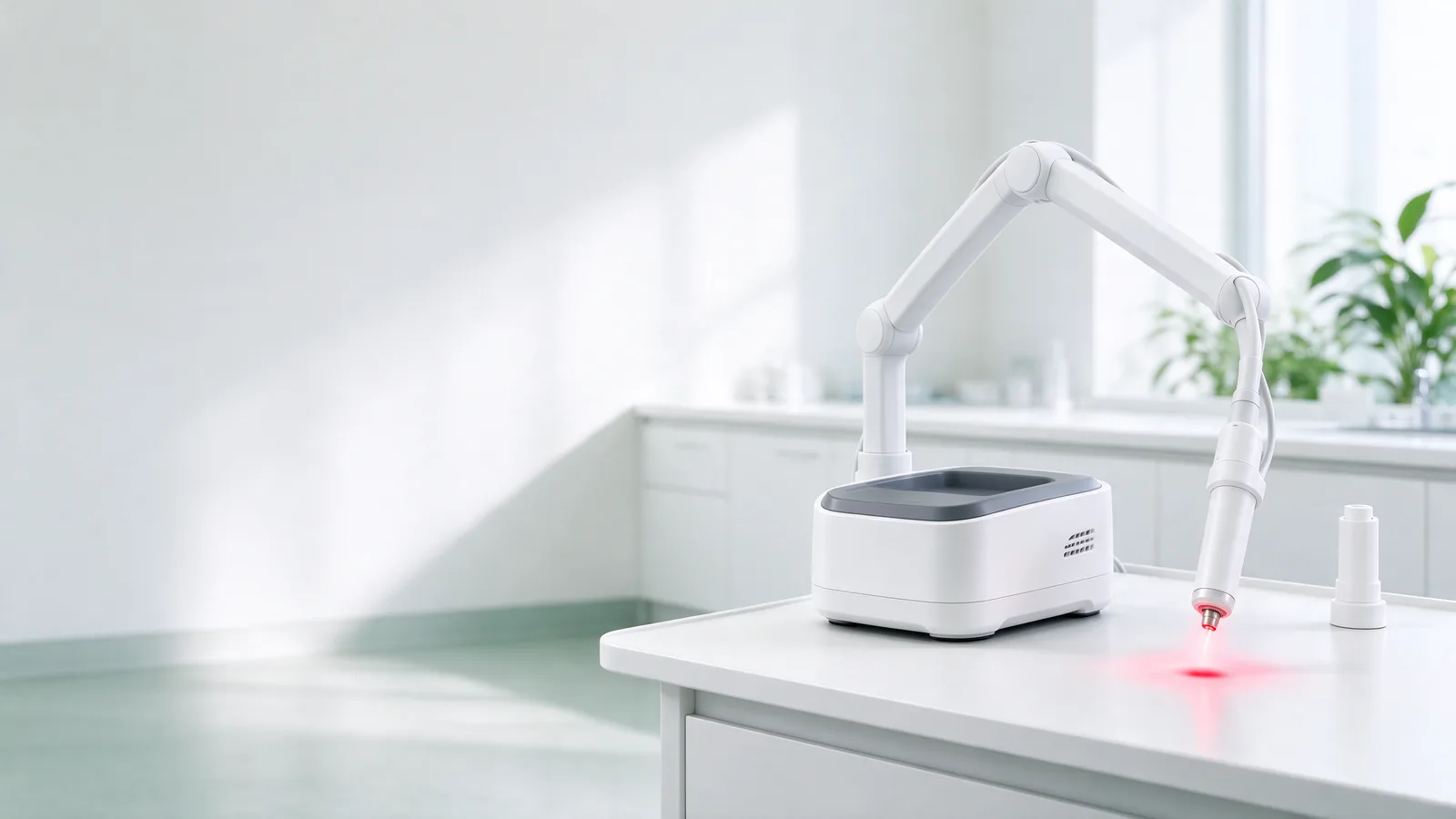
The product approved in Japan is called Akalux, and the light-delivery device (the BioBlade Laser System) was approved alongside it. According to Japanese investigators, the drug is infused at 640 mg per m² of body surface area over at least two hours, and the laser is applied 20–28 hours later. Light can be shone on the tumour surface (50 J/cm²) or delivered from inside the tumour through thin optical fibres (100 J/cm). If needed, treatment can be repeated up to four times, at least four weeks apart.
Because it mainly targets cancer cells in the area the light reaches, it can be an option even when cancer has come back in an area already treated with surgery or radiotherapy. How it differs from other treatments with similar “photoimmuno” names is explained in Same name “photoimmunotherapy”, not the same treatment.
Which patients is it for?
In Japan it is approved for unresectable locally advanced or recurrent head and neck cancer. This mainly covers cancers of the tongue and mouth, pharynx, larynx and other head and neck sites that are hard to operate on again or have already received full radiotherapy. In fact, all nine patients in the Tokyo Medical University report had previously had both surgery and radiotherapy.
Because the laser light must reach the whole tumour, the treating team uses imaging to check the tumour’s location, size and depth and the nearby blood vessels before deciding whether it is suitable. General information on head and neck cancer in Japan is on our Head and Neck Cancer Information page.
What results were seen in trials and in Japanese practice?
In Part 2 of a phase 1/2a trial run in the United States and elsewhere (RM-1929, NCT02422979), 30 patients with recurrent head and neck squamous cell carcinoma were treated. An objective response (tumour shrinkage) was reported in 13 patients (43.3%), including 4 complete responses in which the tumour could no longer be seen on imaging. Disease was controlled in 80%. A single-centre phase 1 trial in three Japanese patients also found a manageable safety profile (International Journal of Clinical Oncology 2021).
Since approval, Japanese university hospitals have published real-world outcomes. The numbers below are as stated in each paper.
| Study | Patients | Reported results |
|---|---|---|
| International phase 1/2a (Cognetti 2021) | 30 with recurrent head and neck squamous cell carcinoma | Objective response 43.3% (13), 4 complete responses, disease control 80%, median overall survival 9.30 months |
| Tokyo Medical University (Okamoto 2022) | 9 after surgery and radiotherapy | 2 complete and 6 partial responses (response rate 89%), 1-year survival 85.7%, quality of life maintained 4 weeks after treatment |
| Three departments in Japan (Okamoto 2025) | 40 patients, 80 light treatments | Response rate 75.0%, disease control 95.0%, median overall survival 26.9 months |
Sources: Cognetti DM et al., Head & Neck 2021 / Okamoto I et al., Cancers 2022;14(18):4413 / Okamoto I et al., Cancers 2025;17(16):2671. Patients and periods differ, so the numbers are not compared directly.
In their 2022 report, the Tokyo Medical University team wrote that photoimmunotherapy “did not decrease QOL and had a good local control rate.” In the 2025 multicentre report (patients treated January 2021 to August 2024), some patients kept a long-term complete response after a single cycle, and the investigators concluded that the treatment is effective in real-world practice with an acceptable safety profile. Median progression-free survival was 6.2 months, and patients received about two light treatments on average.
How are side effects managed?
- Pain and mucositis: pain at the treated site and mouth sores are common and are controlled with pain relief. Grade 3 pain occurred in 12.5% in the 2025 report.
- Laryngeal oedema (swelling inside the throat): the side effect watched most closely, seen in 42.5% in the multicentre report. Japanese hospitals therefore prepare airway protection such as a tracheostomy or intubation before treatment and monitor patients in intensive care.
- Bleeding and infection: bleeding can occur as the tumour shrinks, and severe infection was reported rarely (2 patients), so the investigators stress careful follow-up after treatment. Grade 3 or higher adverse events occurred in 17.5% overall.
- Light management: because the drug reacts to light, lighting is kept at 120 lux or less while it is prepared and the infusion bag is covered with a light-shielding cover. Follow the treating team’s instructions on avoiding light after treatment.
Where is it available, and at what stage?
Japan’s Ministry of Health, Labour and Welfare approved the drug in September 2020. According to the PMDA review report, it was handled under the Conditional Early Approval System, which brings innovative medicines to patients sooner, and it held SAKIGAKE designation. The approval conditions include a use-results survey collecting data on all treated patients, providing results of the ongoing international phase 3 trial (Study 301) to healthcare professionals, and use only by trained physicians. According to the Tokyo Medical University report, patients have been treated at Japanese hospitals since January 2021.
Outside Japan, research has continued in more patients through the international phase 3 trial (Study 301). Public information on photoimmunotherapy in Japan is collected on our Photoimmunotherapy-related Information page.
What should I ask my doctor?
- Can the light reach my tumour well given its location and depth? Is surface or fibre illumination more suitable?
- Will I need airway protection such as a tracheostomy? How long is the hospital stay?
- How many times can it be repeated, and when and how will the effect be checked?
- In what order will it be combined with other treatments such as chemotherapy or immunotherapy?
Frequently asked questions
How effective is head and neck cancer photoimmunotherapy?
In the international phase 1/2a trial, 13 of 30 patients (43.3%) had a tumour response, and in the Japanese multicentre real-world report the response rate among 40 patients was 75.0%. Patients and periods differ, so the likely effect for an individual is judged by the treating team.
Can photoimmunotherapy be repeated?
According to Japanese investigators, it can be repeated up to four times at least four weeks apart. In the multicentre report, patients received about two light treatments on average.
Is photoimmunotherapy in Japan an officially approved treatment?
Yes. Cetuximab sarotalocan (Akalux) and the laser device were approved by Japan’s Ministry of Health, Labour and Welfare in September 2020 for unresectable locally advanced or recurrent head and neck cancer.
Is it the same as the light treatment used for glioblastoma?
No. For brain tumours, photodynamic therapy using the drug talaporfin and a 664 nm laser is covered by health insurance in Japan. See Glioblastoma photodynamic therapy for details.
Related: Same name “photoimmunotherapy”, not the same treatment · Glioblastoma Photodynamic Therapy in Japan: Insurance and Survival · Selective Intra-Arterial Chemoradiotherapy for Tongue Cancer: Scope
Sources
- Rakuten Medical. Approval of Akalux (cetuximab sarotalocan) by Japan’s Ministry of Health, Labour and Welfare, 2020-09-25
rakuten-med.com/us/news/press-releases/2020/09/25/7442
Checked: 2026-10-18 - PMDA. Report on the Deliberation Results: Akalux IV Infusion 250mg (2020)
pmda.go.jp/files/000239770.pdf
Checked: 2026-10-18 - Cognetti DM et al. Phase 1/2a, open-label, multicenter study of RM-1929 photoimmunotherapy in patients with locoregional, recurrent head and neck squamous cell carcinoma. Head & Neck 2021. DOI 10.1002/hed.26885 (results summary: Rakuten Medical release, 2021-10-27)
rakuten-med.com/us/news/press-releases/2021/10/27/7540
Checked: 2026-10-18 - Okamoto I, Okada T, Tokashiki K, Tsukahara K. Quality-of-Life Evaluation of Patients with Unresectable Locally Advanced or Locally Recurrent Head and Neck Carcinoma Treated with Head and Neck Photoimmunotherapy. Cancers 2022;14(18):4413
mdpi.com/2072-6694/14/18/4413
Checked: 2026-10-18 - Okamoto I, Hasegawa O, Kushihashi Y, Masubuchi T, Tokashiki K, Tsukahara K. Real-World Effectiveness and Safety of Photoimmunotherapy for Head and Neck Cancer: A Multicenter Retrospective Study. Cancers 2025;17(16):2671
mdpi.com/2072-6694/17/16/2671
Checked: 2026-10-18
Written by the FTH editorial team. Sources checked 2026-10-18 · Medical review: not applicable
This article is general information based on public sources and does not replace diagnosis or treatment. Please discuss treatment decisions with your medical team.