Japan: offered as self-pay care by facilities that have filed a plan under the Regenerative Medicine Act Clinical research stage — studies in patients are ongoing
The NK cell therapy process runs in this order: consultation and tests, a blood draw from an arm vein (20–100 mL), 2–3 weeks of cell culture, an intravenous drip infusion, and repeat doses every 2–4 weeks. In Japan, the approach of expanding a patient's own NK cells and returning them is offered as self-pay care under the Regenerative Medicine Act, and in a Japanese clinical trial patients completed three infusions without serious side effects related to the NK cells. This article sets out each step and what to prepare, based on documents published by Japan's Ministry of Health, Labour and Welfare (MHLW) and international studies.
What is NK cell therapy? Multiplying your own immune cells and returning them
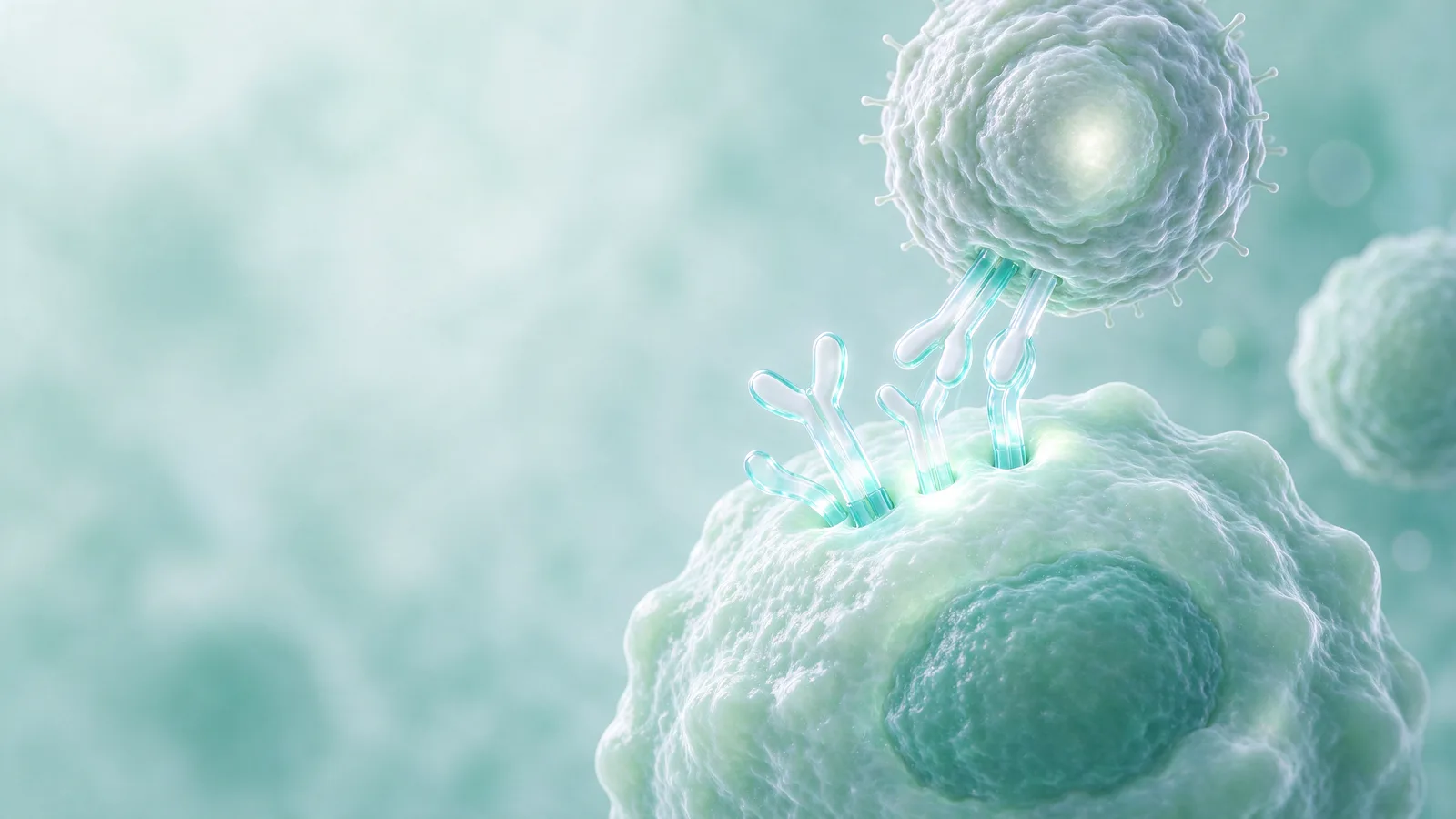
NK cells (natural killer cells) are a type of lymphocyte in the blood. Without prior training, they recognize and attack abnormal cells such as cancer cells or virus-infected cells. Because the body has relatively few NK cells, researchers have developed ways to collect them from blood, greatly increase their number in the laboratory, and infuse them back.
There are two main routes, depending on where the cells come from. NK cell therapy at Japanese clinics mostly uses the patient's own blood (autologous NK cell therapy). In the United States and elsewhere, clinical trials have given leukemia patients allogeneic NK cells from family members or other donors. CAR-NK, which adds a targeting receptor through gene engineering, is a separate treatment; see CAR-NK vs CAR-T.
The NK cell therapy process in six steps
| Step | What happens | Time or standard |
|---|---|---|
| 1. Consultation | The doctor reviews diagnosis and current treatment and decides whether the therapy is suitable | First visit |
| 2. Blood draw | Blood is drawn from an arm vein | 20–100 mL |
| 3. Culture | NK cells are activated and expanded in a clean room | 14–19 days (Japanese published document); 21–22 days (Japanese trial) |
| 4. Quality testing | Only cells that pass sterility and pyrogen tests are used | Before infusion |
| 5. Infusion | Cells suspended in saline are given by IV drip | 60 minutes per dose in the trial |
| 6. Repeat and follow-up | Doses continue at set intervals; progress is checked with imaging | Every 2–4 weeks (published document); 3 doses one week apart (Japanese trial) |
Sources: MHLW regenerative medicine plan disclosure (NK cell therapy explanation and consent form); Sakamoto et al., J Transl Med 2015. Actual schedules vary by facility and patient.
Each step in detail
Step 1, consultation: bring your medical records
At the first consultation, the doctor looks at the diagnosis, stage, previous treatment and recent imaging to decide whether NK cell therapy fits. Bringing a medical certificate, pathology report, recent CT or MRI reports, a list of current medicines and your chemotherapy schedule speeds things up. Blood tests for infections are often done to make sure the blood is safe to culture.
Step 2, blood draw: the same as a routine blood test
Blood is taken from a vein on the inside of the arm. The NK cell therapy document published on the MHLW portal gives 20–100 mL, and the Japanese digestive cancer trial used 20–40 mL. No special apheresis equipment is needed, so patients go home the same day.
Step 3, culture and quality testing: 2–3 weeks
NK cells are separated from the blood, activated and expanded in a dedicated clean room. The published document gives 14–19 days of culture, and only cells that pass sterility and pyrogen tests are used. If the cell count is lower than expected or a test result is out of range, the infusion date may move. Cells can also be frozen and thawed on the planned day, which helps patients who travel from far away.
Step 4, infusion and repeat doses: by IV drip
The cultured cells are mixed with saline and given into a vein like a drip. In the Japanese trial each dose took 60 minutes, given three times one week apart; the published document gives a usual interval of 2–4 weeks. There is no fixed total number of doses; the doctor decides based on progress.
What studies in patients have shown
| Study | Patients | Findings (figures as reported) |
|---|---|---|
| Japanese phase I trial (J Transl Med 2015) | 14 enrolled with advanced colorectal, esophageal or gastric cancer; 12 treated | Median NK purity 90.96%; 3 doses one week apart (up to 2 billion cells per dose); no serious infusion-related toxicity; disease remained stable in 5 of 12; blood cancer-killing activity rose in 80% |
| University of Minnesota (Blood 2005) | 19 patients with poor-prognosis acute myeloid leukemia | 5 achieved remission after NK cells from family donors |
| University of Minnesota infusion review (Cytotherapy 2021) | 130 NK cell infusions, 123 evaluable patients | Overall response rate 27.6% (34 patients), higher in leukemia and marrow disorders |
The Japanese phase I trial assessed safety and dose; no dose-limiting toxicity occurred even at the highest dose.
The Japanese investigators reported that their expansion method produced large numbers of highly pure NK cells and that patients tolerated treatment well. As a next step they proposed combining the cells with antibody drugs such as cetuximab and trastuzumab, because NK cells attack antibody-coated cancer cells more effectively. The US donor NK cell study reported remissions in leukemia patients who had been hard to treat with other therapies, and it led to many further NK cell trials.
Side effects and how they are managed: mild fever and tiredness are most common
According to the Japanese published document, the most common reactions are a mild fever below 38°C and fatigue, which usually settle within 1–2 days. Rarely, an allergy-like reaction occurs; it is treated with fever and anti-allergy measures, and the infusion is postponed or stopped. In US studies using donor NK cells, chills during infusion were common and blood pressure sometimes rose, so staff monitored blood pressure and pulse throughout. Bruising or soreness at the needle site is handled as with any injection.
What to check when receiving NK cell therapy in Japan
Japan regulates treatments using cultured cells under the Act on the Safety of Regenerative Medicine, in force since 2014. Treatments are classified into Class I, II or III by risk, and a medical facility must submit a provision plan, with the opinion of a certified regenerative medicine committee, to the MHLW before offering treatment. Facilities that culture the cells must also hold a permit or file a notification. As a result, plan numbers and reviewing committees for NK cell therapy in Japan are public, and patients can check them.
- Plan number: check that the facility's plan is listed on the MHLW regenerative medicine portal.
- Cost: this is self-pay care not covered by health insurance, so the patient pays in full and prices differ by facility. Once culture has started, blood draw and culture fees may not be refunded even if treatment stops.
- Schedule: it takes 2–3 weeks from the first blood draw to the first infusion, so plan your stay or return visit. Ask whether cells can be frozen.
An example of how a Japanese facility describes its NK cell therapy is in NK cell therapy information and NK cell medical information.
Preparation and questions for your doctor
- How should NK cell infusions fit around my current chemotherapy or radiotherapy?
- What can I expect at my stage, and do I need to delay any other treatment?
- How are the blood volume, culture period, cells per dose and total number of doses decided?
- Which tests will check progress, and after which dose?
- Whom do I contact if I develop a fever or allergic reaction, and how is it treated?
Frequently asked questions
How many sessions of NK cell therapy are needed?
There is no fixed number. The Japanese published document describes infusions every 2–4 weeks, and the Japanese trial gave 3 doses one week apart. The doctor decides the number based on your condition and test results.
How long does NK cell culture take?
Usually 2–3 weeks: 14–19 days in the published document and 21–22 days in the Japanese trial. Cells must pass quality tests before infusion, so the date can shift slightly.
Can NK cell therapy be combined with chemotherapy?
Sometimes, yes. The Japanese trial included a patient taking an oral anticancer drug, and the investigators proposed combination with antibody drugs as the next study. Infusion dates are set with your doctor based on your chemotherapy schedule and blood test results.
Is NK cell therapy covered by insurance?
In Japan it is offered as self-pay care outside health insurance, so the patient pays in full. Prices and refund rules differ by facility, so ask for them in writing at the consultation.
Related: CAR-NK vs CAR-T · BCG-unresponsive bladder cancer: Anktiva · All NK cell articles
Sources
- Japan MHLW regenerative medicine plan disclosure — NK cell therapy explanation and consent form (Japanese document)
saiseiiryo.mhlw.go.jp
Checked: 2026-10-24 - Act on the Safety of Regenerative Medicine (Act No. 85 of 2013) — Japanese Law Translation
japaneselawtranslation.go.jp
Checked: 2026-10-24 - Sakamoto N, et al. Phase I clinical trial of autologous NK cell therapy using novel expansion method in patients with advanced digestive cancer. J Transl Med 2015;13:277
doi.org/10.1186/s12967-015-0632-8
Checked: 2026-10-24 - Miller JS, et al. Successful adoptive transfer and in vivo expansion of human haploidentical NK cells in patients with cancer. Blood 2005;105(8):3051-3057 (University of Minnesota)
doi.org/10.1182/blood-2004-07-2974
Checked: 2026-10-24 - Mamo T, et al. Infusion reactions in natural killer cell immunotherapy: a retrospective review. Cytotherapy 2021;23(7):627-634
pmc.ncbi.nlm.nih.gov
Checked: 2026-10-24
Written by the FTH editorial team. Sources checked 2026-10-24 · Medical review: not applicable
This article is general information based on public sources and does not replace diagnosis or treatment. Please discuss treatment decisions with your medical team.