CAR-T: approved treatment (7 products by the U.S. FDA; also approved in Japan and elsewhere for some blood cancers) CAR-NK: in clinical trials — no approved product as of the date checked
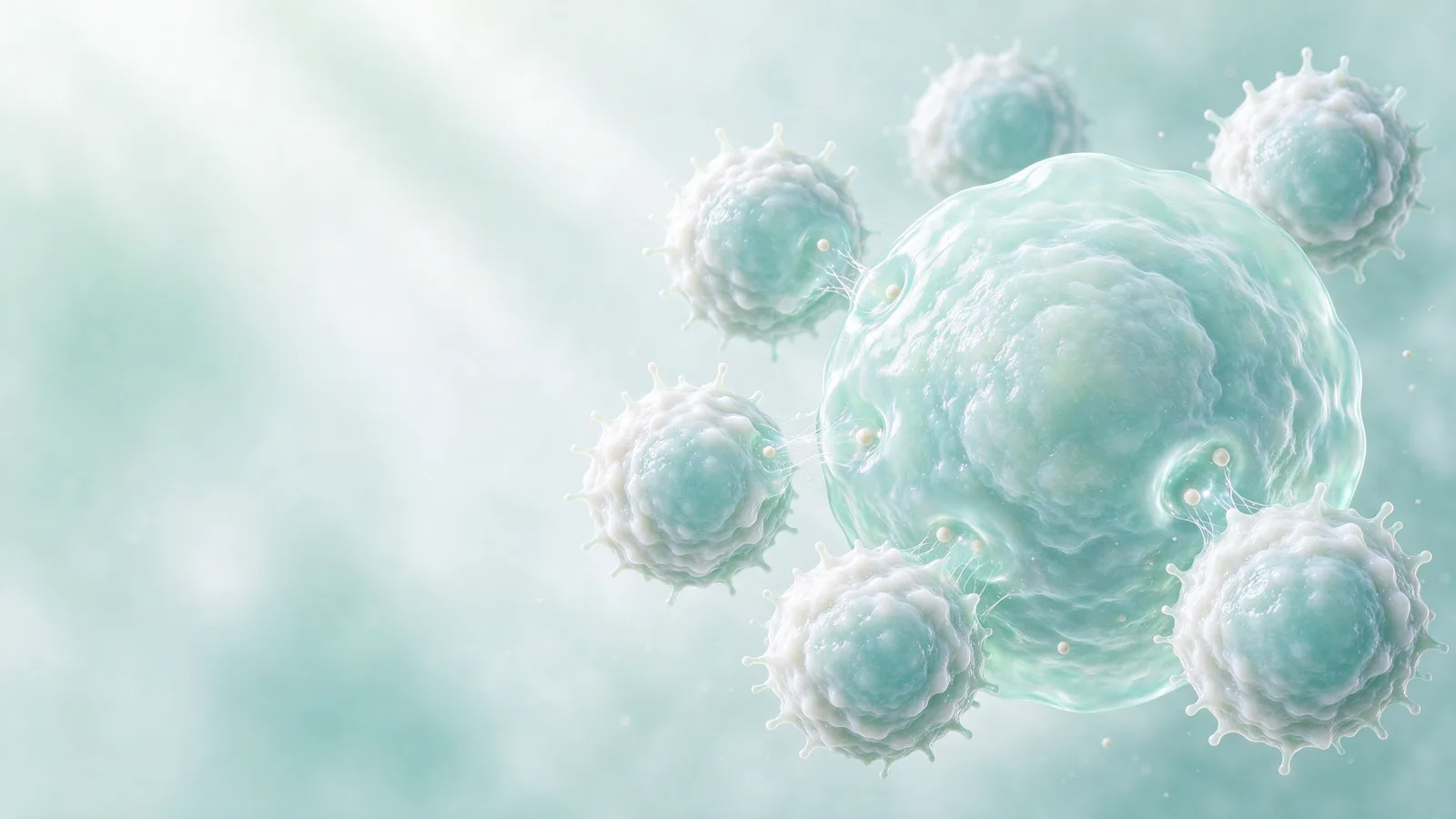
The difference between CAR-NK and CAR-T starts with one question: which immune cell carries the same targeting device (the CAR)? CAR-T is an approved treatment for some blood cancers in the United States, Japan and other countries. CAR-NK is attracting more research because it seems to cause fewer severe side effects and could be made in advance, but it is still in clinical trials. Based on international papers and official FDA and Japanese announcements, this article compares how the two work, their side effects, how they are made and where they stand on approval.
What a CAR is, and how T cells and NK cells differ
CAR stands for chimeric antigen receptor. It is an artificial receptor designed in the laboratory to recognize a specific marker on the surface of cancer cells (for example CD19 in lymphoma or BCMA in multiple myeloma). It is added to immune cells by gene transfer. Put simply, the immune cell is fitted with a “target detector”.
T cells belong to adaptive immunity: once they recognize a target they can survive for a long time and multiply greatly. NK (natural killer) cells belong to innate immunity: they attack abnormal cells without prior training and stay in the body for a relatively short time. A 2024 comparative review in Frontiers in Immunology explains that, even with the same CAR, these differences lead to different durability and side-effect patterns.
Another major difference is where the cells come from. Most approved CAR-T products are made individually from the patient’s own T cells, collected from the blood by apheresis. CAR-NK cells can be obtained from donor blood, umbilical cord blood, a cell line called NK-92 or induced pluripotent stem (iPS) cells, so developers aim for an “off-the-shelf” product that is made in advance and stored frozen.
CAR-T vs CAR-NK at a glance
| Item | CAR-T | CAR-NK |
|---|---|---|
| Cell source | Mainly the patient’s own T cells (apheresis) | Donor blood, cord blood, NK-92 cell line, iPS cells, etc. |
| Manufacturing | Made separately for each patient; takes time | Aims to be off-the-shelf, but gene transfer is less efficient and large-scale expansion is harder |
| Cytokine release syndrome (CRS) | Relatively high risk | Low in reported trials |
| Neurotoxicity (ICANS) | One of the main side effects | Rare in reported trials |
| Graft-versus-host disease (GVHD) | High risk if made from donor cells | Very low risk even from donor cells |
| Persistence in the body | Tends to last long | Short — the biggest challenge |
| Approval stage | 7 products approved by the U.S. FDA; approved in Japan since 2019 | No approved product; in clinical trials |
Sources: Andrea AE et al., Frontiers in Immunology 2024 review / U.S. FDA list of approved cellular and gene therapy products (as of 2026-09-17). The review authors note that a direct comparison is not entirely fair because the two treatments are at different clinical stages.
Cytokine release syndrome is a reaction in which infused immune cells are activated all at once and release inflammatory substances, causing high fever, low blood pressure and other symptoms. ICANS refers to nervous system problems after immune cell therapy, such as reduced consciousness or speech difficulty. CAR-NK does appear to have an advantage here, but the number of treated patients is still small, so rare side effects have not been fully evaluated.
Results in patients so far
CAR-T has already been used in many patients. In the data summarized by the review, complete response rates were 40–54% in aggressive B-cell lymphoma and 71–81% in relapsed or refractory B-cell acute lymphoblastic leukemia, and response rates with BCMA-targeted CAR-T in multiple myeloma were 73–98%. However, in 30–70% of patients who relapsed, the cancer cells had lost or reduced the target marker.
The best-known early result for CAR-NK is a phase 1/2 trial published in NEJM in 2020 by researchers at MD Anderson Cancer Center in the United States. Eleven patients — 6 with relapsed or refractory non-Hodgkin lymphoma and 5 with chronic lymphocytic leukemia, with a median of four prior treatments — received a single infusion of CD19 CAR-NK cells made from cord blood.
| Item | Result (as reported) |
|---|---|
| Response | 8 of 11 patients (73%) |
| Complete remission | 7 patients (4 lymphoma, 3 CLL) |
| CRS, neurotoxicity, GVHD | None observed (even though the cells were HLA-mismatched) |
| Grade 3–4 low blood counts | 10 patients (lymphopenia, neutropenia) |
| Cell persistence | Detected at low levels for 12 months or longer |
Source: Liu E et al., N Engl J Med 2020 (DOI 10.1056/NEJMoa1910607). An early 11-patient trial, not large enough to confirm efficacy.
A follow-up trial using the same approach in 37 patients (NCT03056339) reported 1-year overall survival of 68% and progression-free survival of 32%, without notable CRS, neurotoxicity or GVHD. A progression-free survival of 32% also means the disease progressed again within a year in many patients. According to the review, about 70 CAR-NK studies in cancer have been registered since 2009.
Approval status in the U.S. and Japan
- United States: The FDA list of approved cellular and gene therapy products (as of September 17, 2026) includes seven CAR-T products — Abecma, Aucatzyl, Breyanzi, Carvykti, Kymriah, Tecartus and Yescarta — and no CAR-NK or NK cell product.
- Japan: In March 2019, Kymriah was approved for CD19-positive relapsed or refractory B-cell acute lymphoblastic leukemia and diffuse large B-cell lymphoma, becoming the first CAR-T approved in Asia; Breyanzi and others were approved later. The targets are mainly blood cancers; no CAR-T is approved for solid tumors.
- A CAR-NK trial in Japan: Kyoto University’s Center for iPS Cell Research and Application (CiRA) and the National Cancer Center Hospital East began an investigator-initiated phase 1 trial in 2021 of iPS cell-derived, GPC3-targeted CAR-NK-type cells (iCAR-ILC-N101). The cells are given into the abdominal cavity once a week for four weeks to patients with advanced ovarian clear cell carcinoma that has spread to the peritoneum (target 6–18 patients). The official announcements do not report efficacy results.
The NK cell therapy offered by some Japanese clinics as self-pay care (outside public approval and insurance) was, in the clinic information FTH reviewed, a method of culturing the patient’s own NK cells and infusing them back. This is different from CAR-NK, which carries an added CAR gene, so the shared name does not mean the same evidence applies. See NK Cell Therapy in Japan: Immune Testing vs Treatment Explained and NK Cells.
What patients should check — questions for your doctor
- Is there an approved CAR-T for my cancer type and stage? If so, in which country, and from which line of treatment?
- Is the treatment I was offered CAR-T, CAR-NK, or NK cell culture therapy without gene modification? What is the exact product name and content?
- If it is a CAR-NK trial, what is the registration number (e.g. ClinicalTrials.gov), the phase (1 or 2) and the eligibility criteria?
- If CRS or neurotoxicity occurs, which hospital manages it and how? Is lymphodepleting chemotherapy given beforehand?
- Is there evidence that it is safe to delay or replace standard treatment?
Frequently asked questions
Is CAR-NK better than CAR-T?
That cannot be said. CAR-NK has shown less CRS and GVHD in the trials reported so far, but the cells stay in the body for a short time and patient numbers are small, so the durability of its effect is still being studied. CAR-T is an approved treatment with more evidence.
Can I receive CAR-NK therapy at a hospital now?
As of the date checked, no CAR-NK product appears on the U.S. FDA approval list. In practice the only route is joining a clinical trial, and you must meet its criteria.
Does CAR-NK work for solid tumors such as lung or pancreatic cancer?
Human data are still limited. In solid tumors it is hard to choose a target marker and for cells to enter and survive in the tumor environment, so studies such as Japan’s ovarian cancer trial are at an early clinical stage.
Is NK cell therapy at Japanese clinics the same as CAR-NK?
No. Clinic NK cell therapy usually means self-pay culture and re-infusion of your own NK cells, while CAR-NK cells carry an added target-detector gene and are being evaluated only in clinical trials.
Related articles: NK Cell Therapy in Japan: Immune Testing vs Treatment Explained · FDA Approves Atezolizumab for Stage III dMMR Colon Cancer
Sources
- Andrea AE, Chiron A, Sarrabayrouse G, Bessoles S, Hacein-Bey-Abina S. A structural, genetic and clinical comparison of CAR-T cells and CAR-NK cells: companions or competitors? Frontiers in Immunology 2024
doi.org/10.3389/fimmu.2024.1459818
Checked: 2026-10-18 - Liu E et al. Use of CAR-Transduced Natural Killer Cells in CD19-Positive Lymphoid Tumors. N Engl J Med 2020
doi.org/10.1056/NEJMoa1910607
Checked: 2026-10-18 - U.S. FDA. Approved Cellular and Gene Therapy Products
fda.gov — Approved Cellular and Gene Therapy Products
Checked: 2026-10-18 - National Cancer Center Japan and Kyoto University CiRA. Press release on the phase 1 trial of iPS cell-derived CAR-NK (GPC3) cells for ovarian clear cell carcinoma (2021-11-11)
ncc.go.jp/en/information/press_release/20211111
Checked: 2026-10-18 - The Pharma Letter. Japanese approval of Kymriah makes it the first CAR-T cell therapy authorized in Asia (2019-03-26)
thepharmaletter.com
Checked: 2026-10-18
Written by the FTH editorial team. Sources checked 2026-10-18 · Medical review: not applicable
This article is general information based on public sources and does not replace diagnosis or treatment. Please discuss treatment decisions with your medical team.