
Phase 2 clinical trial (single arm, no control group) — TIL therapy results: IOV-COM-202 Cohort 1A (NCT03645928), ESMO 2026 oral presentation, abstract 2072O · Lifileucel has U.S. FDA accelerated approval after prior therapy; frontline use is in the phase 3 TILVANCE-301 trial
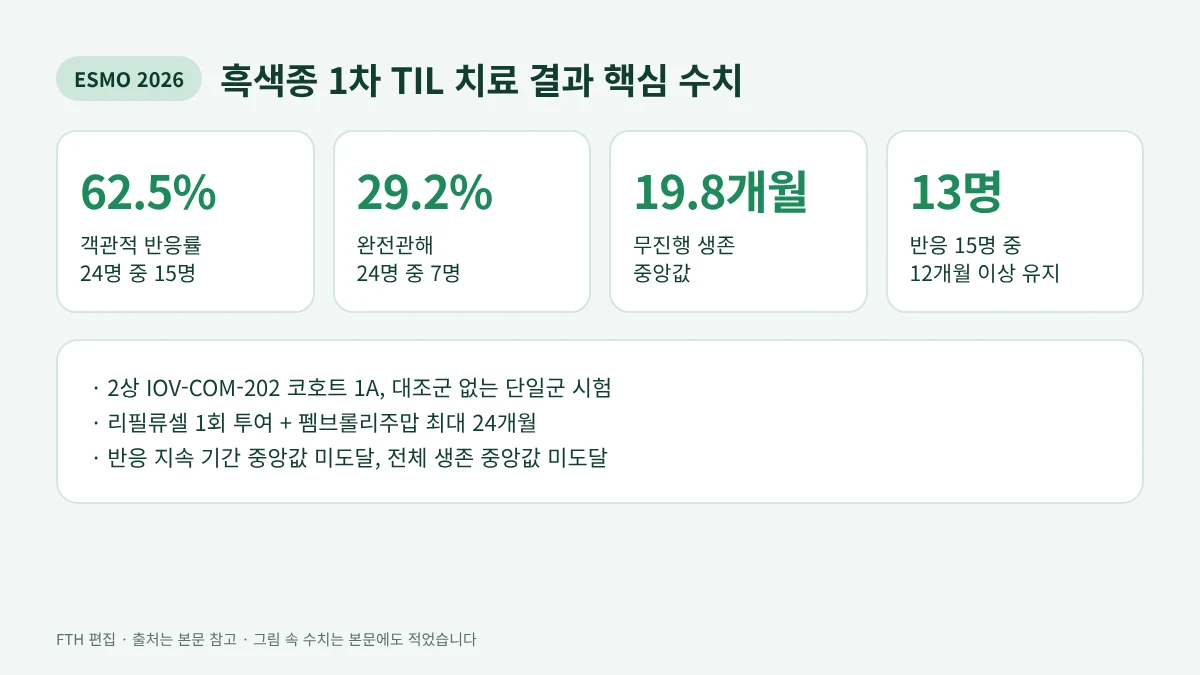
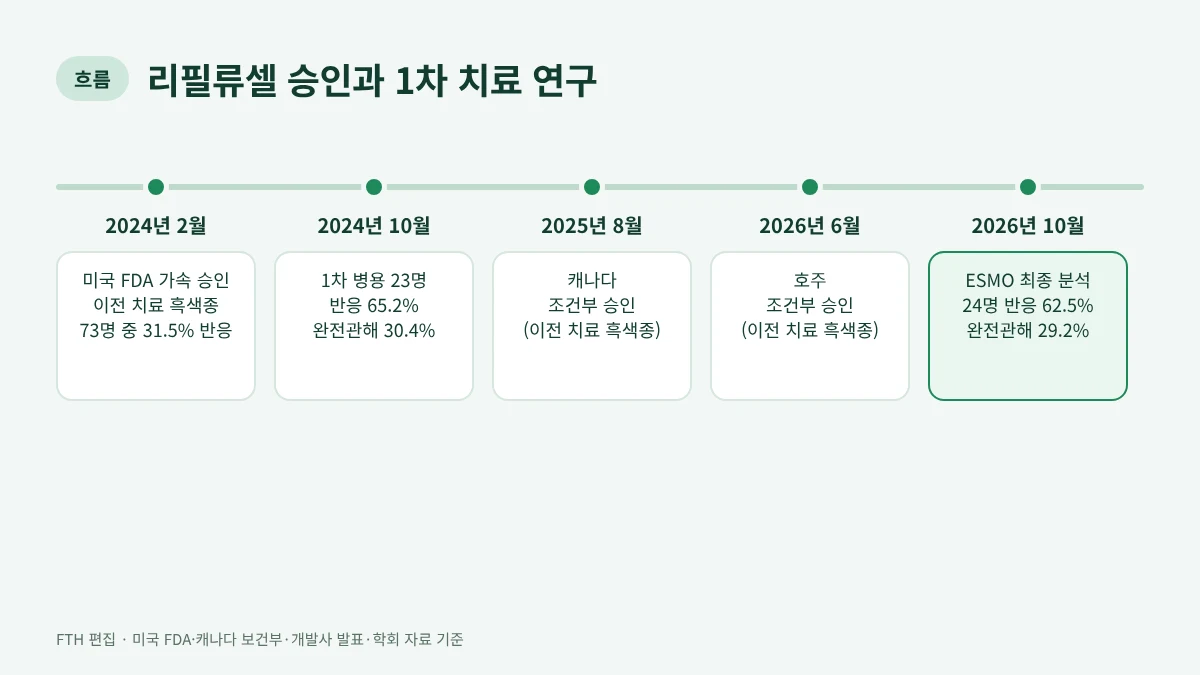
TIL therapy results in frontline advanced melanoma were presented at ESMO 2026 in October 2026. In the final analysis of phase 2 IOV-COM-202 Cohort 1A, 24 patients who had never received immune checkpoint inhibitors were given a single infusion of the TIL cell therapy lifileucel (Amtagvi) followed by pembrolizumab (Keytruda): 15 (62.5%) had tumor shrinkage and 7 (29.2%) had a complete response on scans. Thirteen of the 15 responders kept their response for 12 months or longer, and a randomized phase 3 trial is now enrolling.
TIL therapy results: what is new?
Tumor-infiltrating lymphocytes (TIL) are T cells that have already entered a tumor to fight it. TIL therapy takes these cells from the patient's own tumor, expands them in a laboratory and returns them in one infusion. Our immune cell therapy types comparison explains where TIL fits among cell therapies; this article covers the newer human results.
Lifileucel was approved in the United States in February 2024 for melanoma that progressed after immunotherapy. The new data test an earlier setting: first treatment of advanced melanoma, combined with pembrolizumab. Dr Andrew Furness of The Royal Marsden NHS Foundation Trust presented the results orally in Madrid on October 23, 2026.
| Item | Details |
|---|---|
| Trial | IOV-COM-202 Cohort 1A (NCT03645928), international multicenter phase 2 |
| Control group | None (single arm) |
| Patients | Advanced melanoma, no prior checkpoint inhibitor |
| Numbers | 27 treated; 24 analyzed (product met manufacturing specifications) |
| Treatment | One lifileucel infusion + pembrolizumab up to 24 months |
| Primary endpoint | Investigator-assessed objective response rate (RECIST 1.1) |
| Presentation | ESMO 2026 abstract 2072O, October 23, 2026 |
Sources: ASCO Post, OncoDaily, News-Medical (2026-10); Iovance release (2026-10-23). No full journal paper had appeared as of November 2026.
Who was treated?
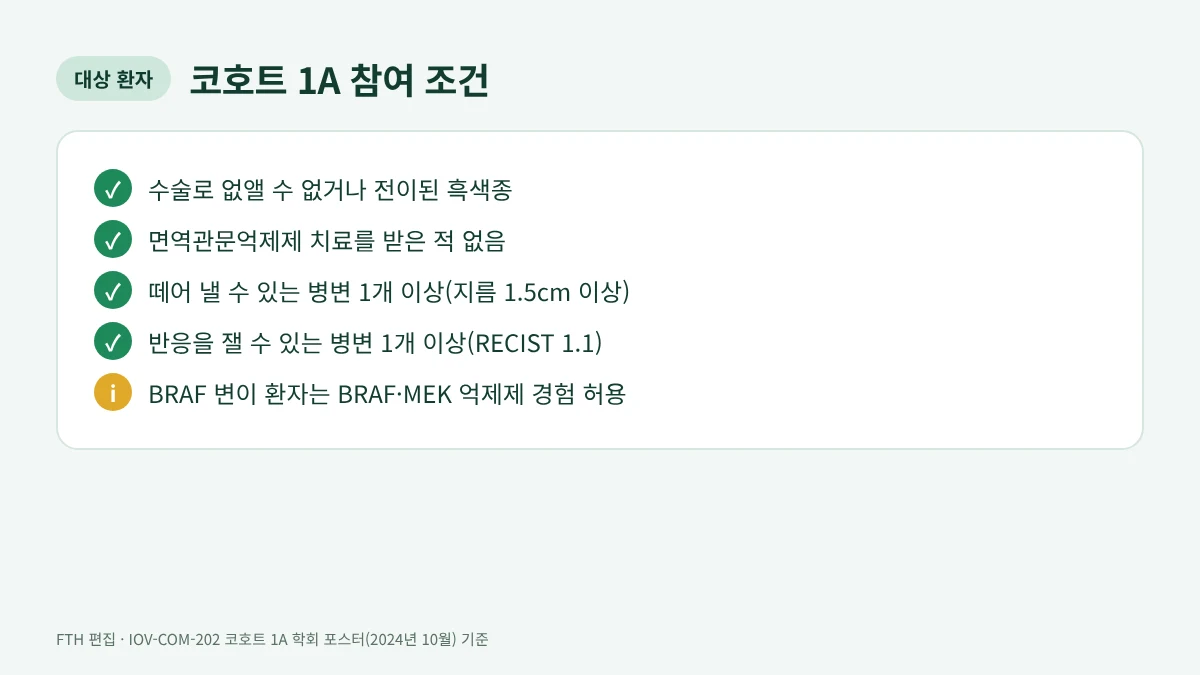
Cohort 1A enrolled people with unresectable or metastatic melanoma who had not received a checkpoint inhibitor such as a PD-1 blocker. Patients with a BRAF mutation could have had BRAF/MEK targeted therapy. In the April 2024 data, the 23 treated patients had a median age of 51 years (range 18 to 68).
The investigators noted that about half of patients given frontline combination immunotherapy do not gain long-term benefit. For another immunotherapy approach in melanoma, see our RP1 oncolytic virus for melanoma article.
How is TIL therapy given?
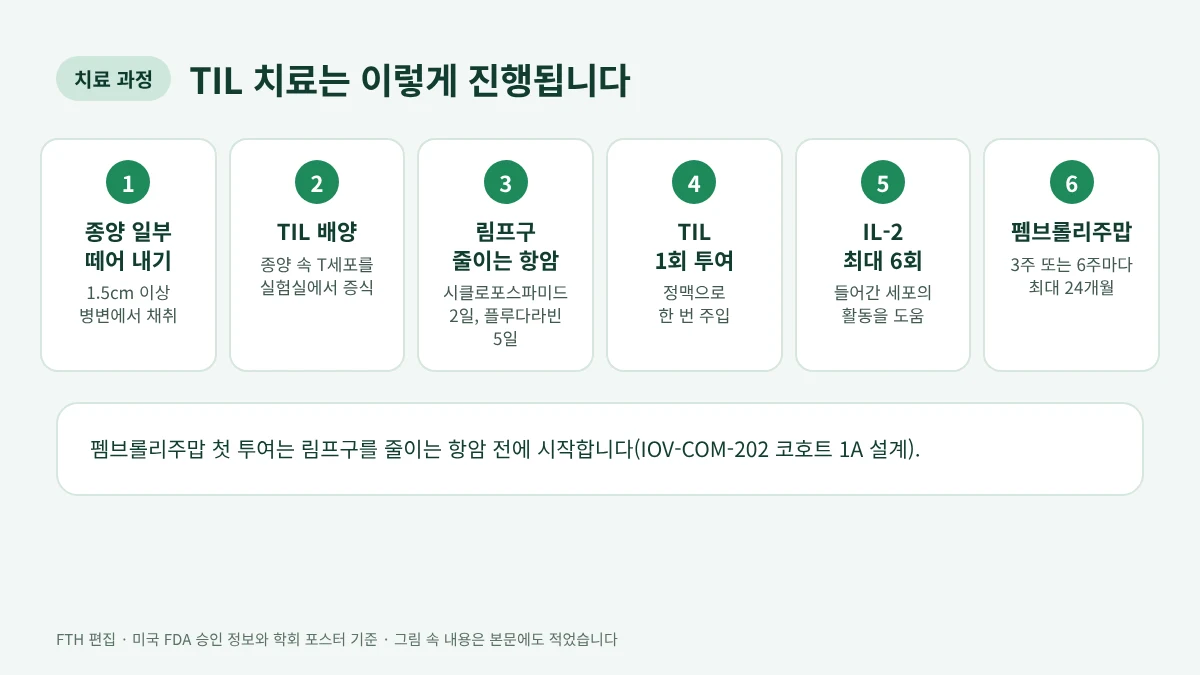
TIL therapy starts with surgery to remove part of a tumor, unlike CAR-T, which starts with collecting blood cells. Cohort 1A required at least one resectable lesion of 1.5 cm or more. The sequence described in the FDA approval information and the 2024 conference poster is:
- Tumor removal: part of the tumor is sent for TIL manufacturing.
- Cell expansion: the T cells are grown into billions; the FDA dose range is 7.5 to 72 billion viable cells.
- First pembrolizumab dose: given before lymphodepletion in Cohort 1A.
- Lymphodepleting chemotherapy: cyclophosphamide (60 mg/kg) for 2 days and fludarabine (25 mg/m²) for 5 days.
- One TIL infusion into a vein.
- IL-2: aldesleukin every 8 to 12 hours, up to 6 doses.
- Pembrolizumab: 200 mg every 3 weeks or 400 mg every 6 weeks for up to 24 months.
Because lymphodepletion and IL-2 are demanding, the U.S. label requires treatment in an inpatient hospital setting with intensive care available. Our CAR-T therapy process article describes a similar hospital course.
What were the frontline TIL therapy results?
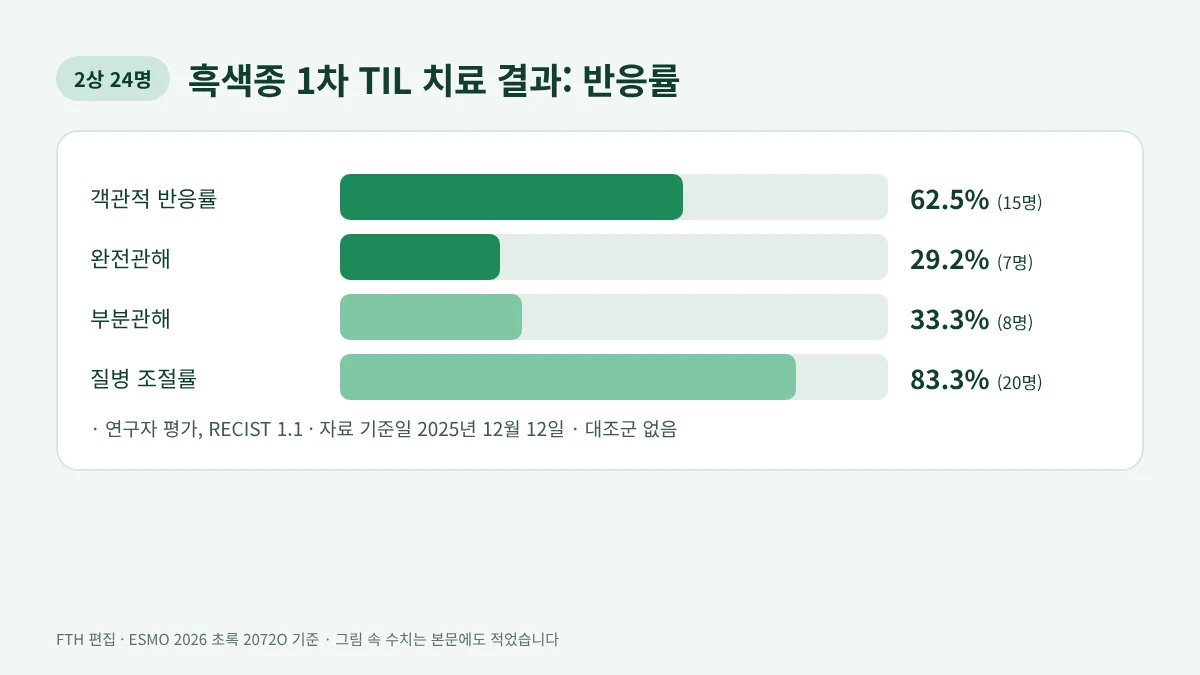
At the December 12, 2025 data cutoff, 15 of 24 patients (62.5%; 95% CI 40.6 to 81.2%) had an objective response: 7 (29.2%) complete and 8 (33.3%) partial. Disease control was seen in 20 (83.3%). Responses were assessed by investigators using RECIST 1.1.
| Measure (24 patients) | Result |
|---|---|
| Objective response rate | 62.5% (15) |
| Complete response | 29.2% (7) |
| Partial response | 33.3% (8) |
| Disease control rate | 83.3% (20) |
| Median progression-free survival | 19.8 months (95% CI 3.6 months to not reached) |
| Median overall survival | Not reached (95% CI 19.2 months to not reached) |
Sources: OncoDaily ESMO 2026 summary (abstract 2072O); Iovance release (2026-10-23). PFS was measured from the first pembrolizumab dose.
The results are consistent with the 2024 update: in 23 patients (April 2024 data), the objective response rate was 65.2% (15) and the complete response rate 30.4% (7).
How long did responses last?
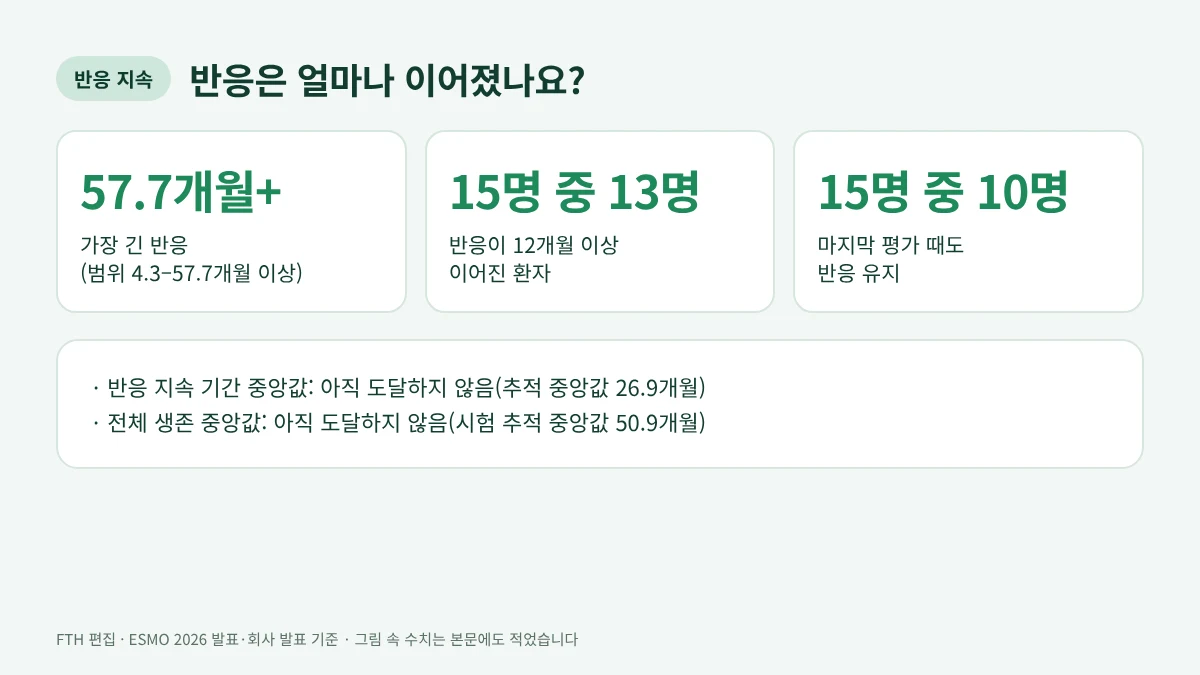
Median duration of response had not been reached at a median follow-up of 26.9 months, with individual responses from 4.3 to more than 57.7 months. Thirteen of 15 responders kept their response for at least 12 months, and 10 were still in complete or partial response at the last assessment. Median overall survival had not been reached at a median study follow-up of 50.9 months.
Dr Furness said the findings suggest that adding TIL therapy to first-line pembrolizumab can produce deep and durable responses, and that larger studies will show who benefits most. According to the company, median PFS2 (until progression on the next therapy) was 34.3 months.
How are side effects managed?
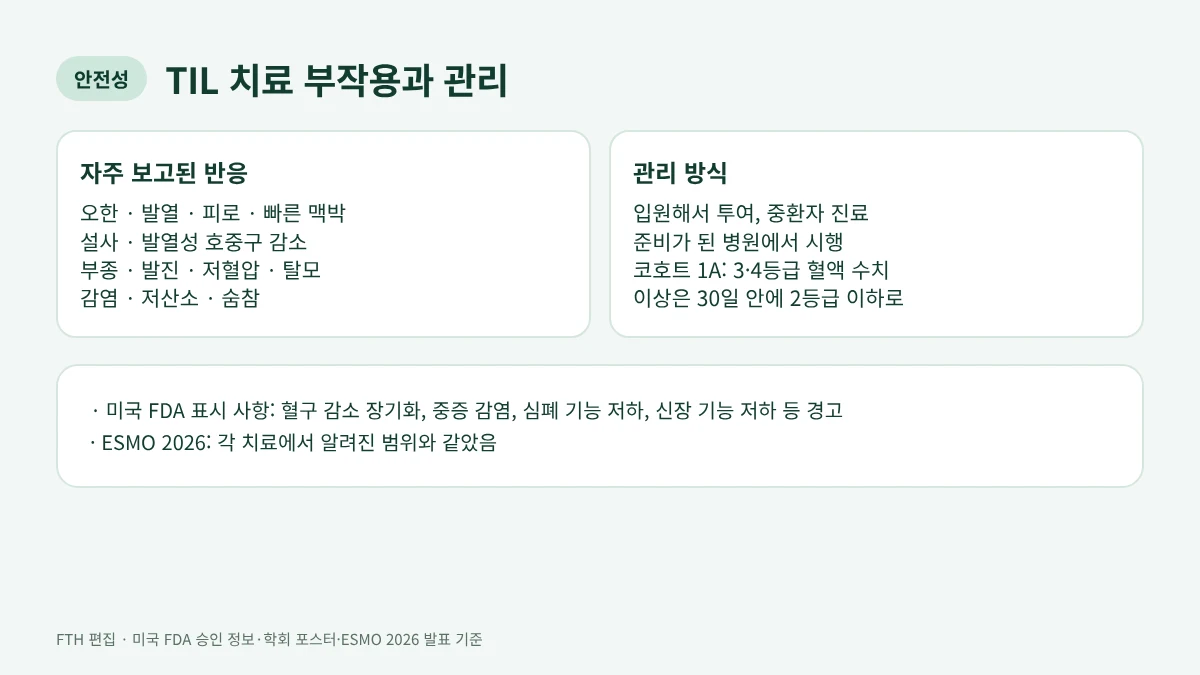
The ESMO 2026 abstract described safety as consistent with the known profiles of lifileucel and pembrolizumab. In its October 2026 release, the company said later adverse events resembled pembrolizumab alone. Company materials describe events from the lifileucel regimen as occurring and resolving early, and in the 2024 poster grade 3/4 blood count abnormalities resolved to grade 2 or lower within 30 days of the infusion.
- Common reactions (FDA, 20% or more): chills, fever, fatigue, fast heart rate, diarrhea, febrile neutropenia, edema, rash, low blood pressure, hair loss, infection, low oxygen, shortness of breath
- U.S. boxed warning: treatment-related mortality, prolonged severe cytopenia, severe infection, cardiopulmonary and renal impairment
- Care setting: given as an inpatient, with intensive care and cardiopulmonary specialists available
Where is TIL therapy available? Approval and phase 3
Frontline lifileucel plus pembrolizumab is not yet approved anywhere; lifileucel is approved only after prior therapy. The FDA granted accelerated approval on February 16, 2024 for melanoma previously treated with a PD-1 blocker (and a BRAF inhibitor if BRAF V600-positive), based on a 31.5% response rate in 73 patients in the C-144-01 trial. Health Canada (August 2025) and Australia's TGA (June 2026) later granted conditional approvals for the same setting.
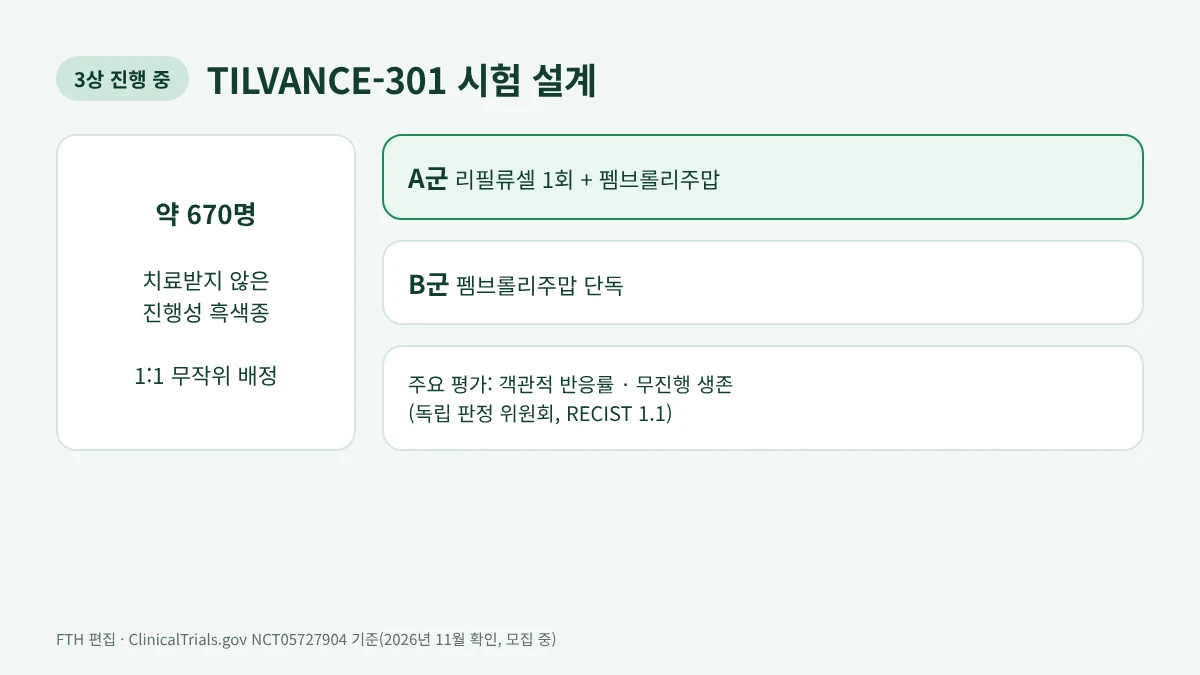
The phase 3 TILVANCE-301 trial (NCT05727904) randomizes about 670 untreated patients 1:1 to lifileucel plus pembrolizumab or pembrolizumab alone, with blinded independent review of objective response rate and progression-free survival as primary endpoints. As of November 2026 it was recruiting in 16 countries across North America, Europe, Australia, Israel and Singapore; Japan is not among the listed countries.
For immune cell therapy information in Japan, see our NK cell information page.
Questions for your doctor
- Is my melanoma at the frontline stage, or have I already received a PD-1 blocker?
- Do I have a resectable lesion of 1.5 cm or more for TIL manufacturing?
- Am I fit enough for lymphodepleting chemotherapy and inpatient IL-2?
- Which countries and hospitals take part in trials such as TILVANCE-301?
Frequently asked questions
Are TIL therapy results better than pembrolizumab alone?
Cohort 1A had no control group, so it cannot answer that directly. The randomized phase 3 TILVANCE-301 trial is designed to compare the two.
How many times is TIL therapy given?
Lifileucel is given once. It is preceded by 7 days of lymphodepleting chemotherapy and followed by up to 6 doses of IL-2; in Cohort 1A pembrolizumab continued for up to 24 months.
What does a 29.2% complete response mean?
Seven of 24 patients reached a state in which the measured tumors disappeared on imaging (RECIST 1.1 complete response). Whether it lasts is checked with regular scans.
Is TIL therapy used for cancers other than melanoma?
As of November 2026 the approved use is melanoma after prior therapy. Other solid tumors are being studied in clinical trials, and results in cancers such as sarcoma are being presented at meetings.
Sources
- The ASCO Post — TIL therapy plus pembrolizumab for advanced melanoma (ESMO 2026 abstract 2072O, 2026-10)
ascopost.com
Checked: 2026-11-24 - OncoDaily — ESMO 2026: What's new in melanoma immunotherapy?
oncodaily.com
Checked: 2026-11-24 - News-Medical — Nearly one third of patients with advanced melanoma saw tumors disappear completely after receiving TIL therapy plus pembrolizumab (2026-10-24)
news-medical.net
Checked: 2026-11-24 - Iovance Biotherapeutics (company release) — Iovance presents new data at ESMO 2026 demonstrating deep, durable responses with lifileucel plus pembrolizumab in frontline advanced melanoma (2026-10-23)
finviz.com
Checked: 2026-11-24 - Thomas S, Gogas H, Hong YK, et al. Efficacy and safety of lifileucel and pembrolizumab in patients with immune checkpoint inhibitor-naive unresectable or metastatic melanoma: updated results from IOV-COM-202 cohort 1A. Society for Melanoma Research 2024 poster
iovance.com
Checked: 2026-11-24 - U.S. FDA — FDA grants accelerated approval to lifileucel for unresectable or metastatic melanoma (2024-02-16)
fda.gov
Checked: 2026-11-24 - U.S. FDA — AMTAGVI (lifileucel) prescribing information
fda.gov
Checked: 2026-11-24 - Health Canada — Regulatory Decision Summary for Amtagvi
dhpp.hpfb-dgpsa.ca
Checked: 2026-11-24 - Iovance Biotherapeutics (company release) — Amtagvi (lifileucel) granted approval for the treatment of advanced melanoma in Australia (2026-06-03)
aap.com.au
Checked: 2026-11-24 - ClinicalTrials.gov — NCT05727904, TILVANCE-301 phase 3 study
clinicaltrials.gov
Checked: 2026-11-24 - ClinicalTrials.gov — NCT03645928, IOV-COM-202 study
clinicaltrials.gov
Checked: 2026-11-24
Written by the FTH editorial team, sources checked 2026-11-24 · Medical review: none
This article is general information based on public sources and does not replace diagnosis or treatment. Please discuss treatment decisions with your care team.