Phase 1 clinical trials — CAR-NK therapy results: lymphoma CD19 CAR-NK (QUILT-106, NCT06334991) and relapsed acute myeloid leukemia SENTI-202 (NCT06325748), both early single-arm trials without a control group · U.S. FDA RMAT designation (SENTI-202)
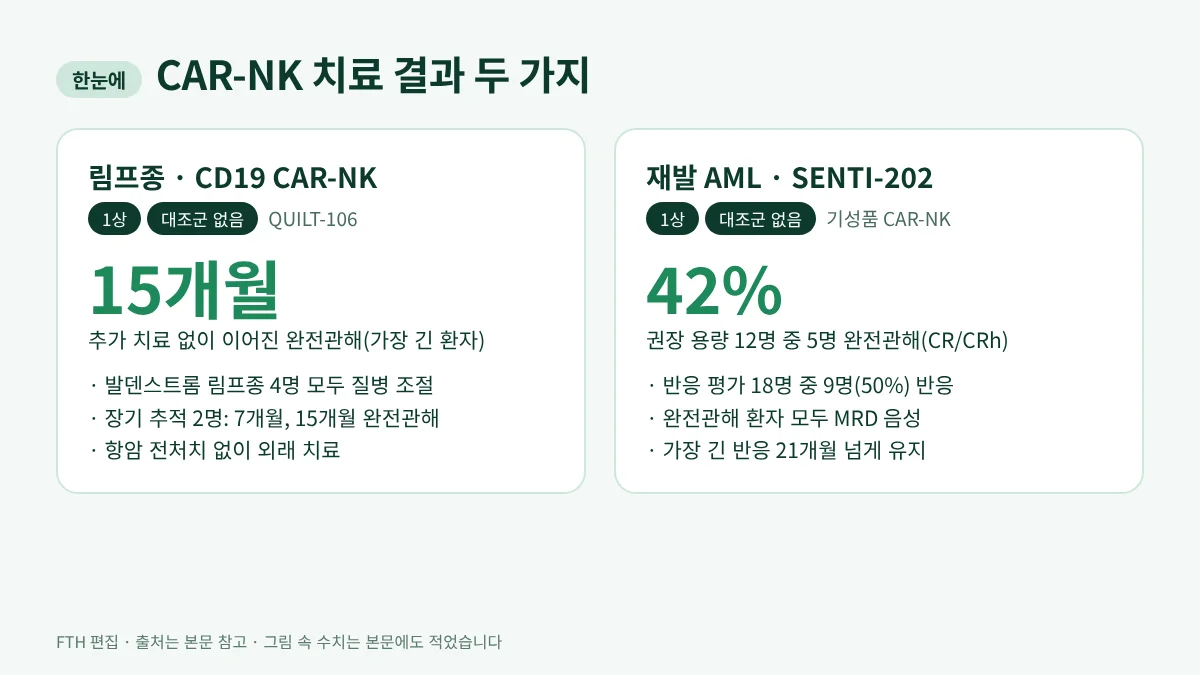
CAR-NK therapy results are now arriving from phase 1 trials in people. Two patients with Waldenström lymphoma who received a CD19 CAR-NK product plus rituximab, with no chemotherapy conditioning, remained in complete remission at 7 and 15 months without further treatment. In relapsed or refractory acute myeloid leukemia (AML), 5 of 12 patients (42%) at the recommended dose of the off-the-shelf CAR-NK SENTI-202 achieved CR or CRh (complete remission with partial hematologic recovery), and both programs are preparing their next trials.
Where do CAR-NK therapy results stand today?
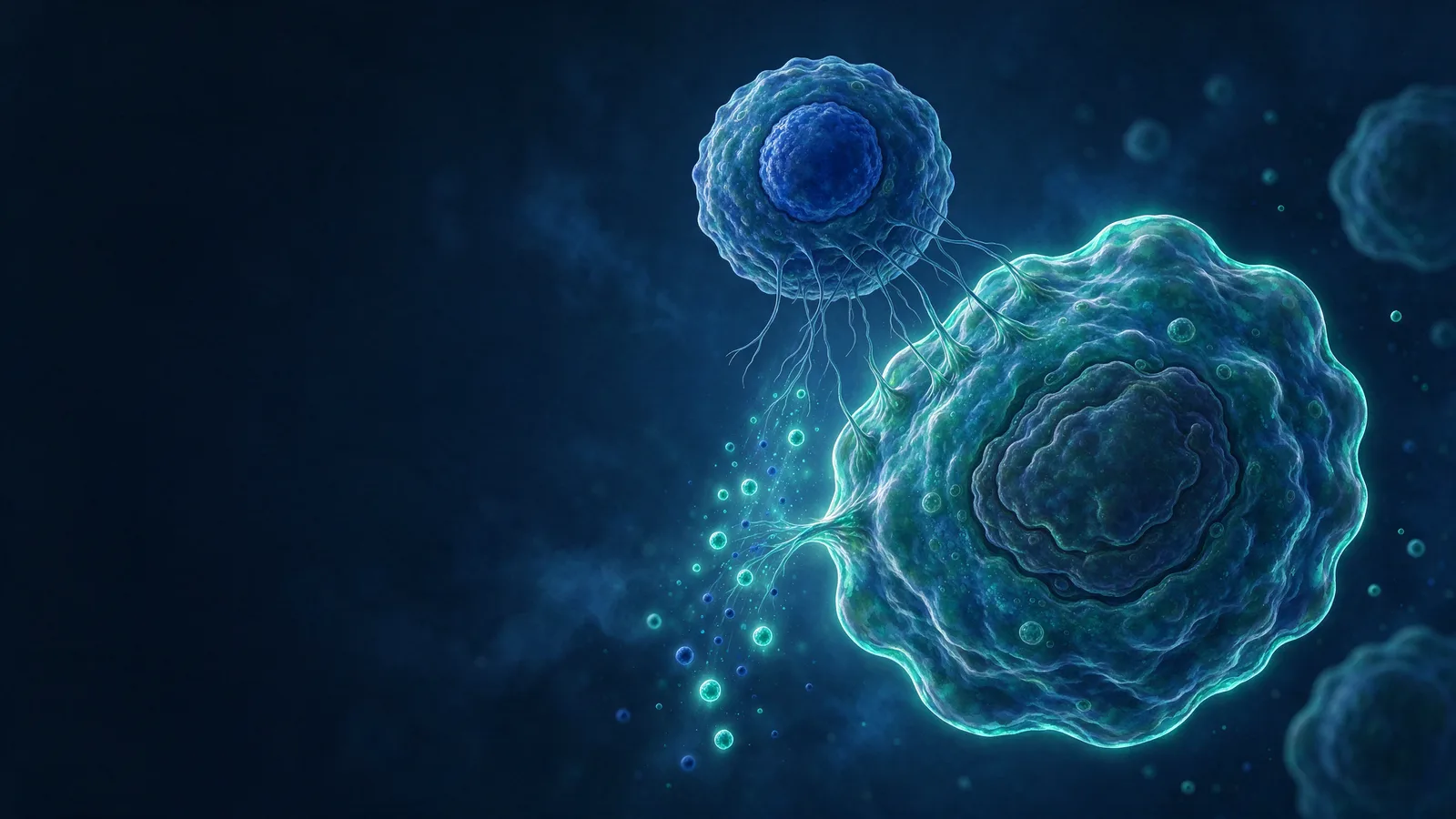
CAR-NK therapy places an engineered receptor (CAR) that recognizes a cancer marker on natural killer (NK) cells, part of the body's first line of immune defense. The goal is an off-the-shelf product made in advance from donor cells, frozen, and used when needed. How it differs from CAR-T is covered in CAR-NK vs CAR-T, and a comparison with other cell therapies is in types of immune cell therapy. This article covers only the human results published since then.
A 2026 review of CAR-NK data from the December 2025 American Society of Hematology (ASH) meeting (Experimental Hematology & Oncology 15:46) concluded that early trials consistently showed encouraging response rates with manageable side effects. Below are two results that patients and families ask about most, with their dates.
| Item | Lymphoma CD19 CAR-NK | Relapsed AML SENTI-202 |
|---|---|---|
| Developer | ImmunityBio (US) | Senti Biosciences (US) |
| Phase | Phase 1, QUILT-106 | Phase 1, SENTI-202-101 |
| Control group | None (single arm) | None (single arm) |
| Patients | 4 with Waldenström lymphoma | 20 treated, 18 evaluable |
| Conditioning | None, all outpatient | Fludarabine and cytarabine |
| Key result | 2 complete remissions lasting 7 and 15 months | 5 of 12 (42%) achieved CR or CRh at recommended dose |
| Reported | January 16, 2026 | December 8, 2025; update May 14, 2026 |
Sources: OnClive and Targeted Oncology (2026-01), Senti Biosciences releases (2025-12-09, 2026-05-14), ClinicalTrials.gov.
Lymphoma CAR-NK results: 15-month complete remission without chemotherapy
QUILT-106 is ImmunityBio's first-in-human, open-label phase 1 trial (NCT06334991, 20 enrolled). The product, CD19 t-haNK, is an off-the-shelf CAR-NK built on the NK-92 cell line. It carries a CAR against CD19 on lymphoma cells and a high-affinity CD16 receptor that strengthens killing of antibody-coated cancer cells. Adding the CD20 antibody rituximab lets it attack lymphoma cells in two ways. The primary endpoint is safety; tumor response is a secondary endpoint (OnClive, 2026-01-16).
Eligible patients were adults with relapsed or refractory CD19- and CD20-positive B-cell non-Hodgkin lymphoma who had received at least two lines of cytotoxic chemotherapy and prior anti-CD20 antibody therapy. Primary CNS lymphoma, CLL and Burkitt lymphoma were excluded. Waldenström macroglobulinemia is a slow-growing, low-grade B-cell lymphoma that mainly involves the bone marrow.
What is the treatment schedule?
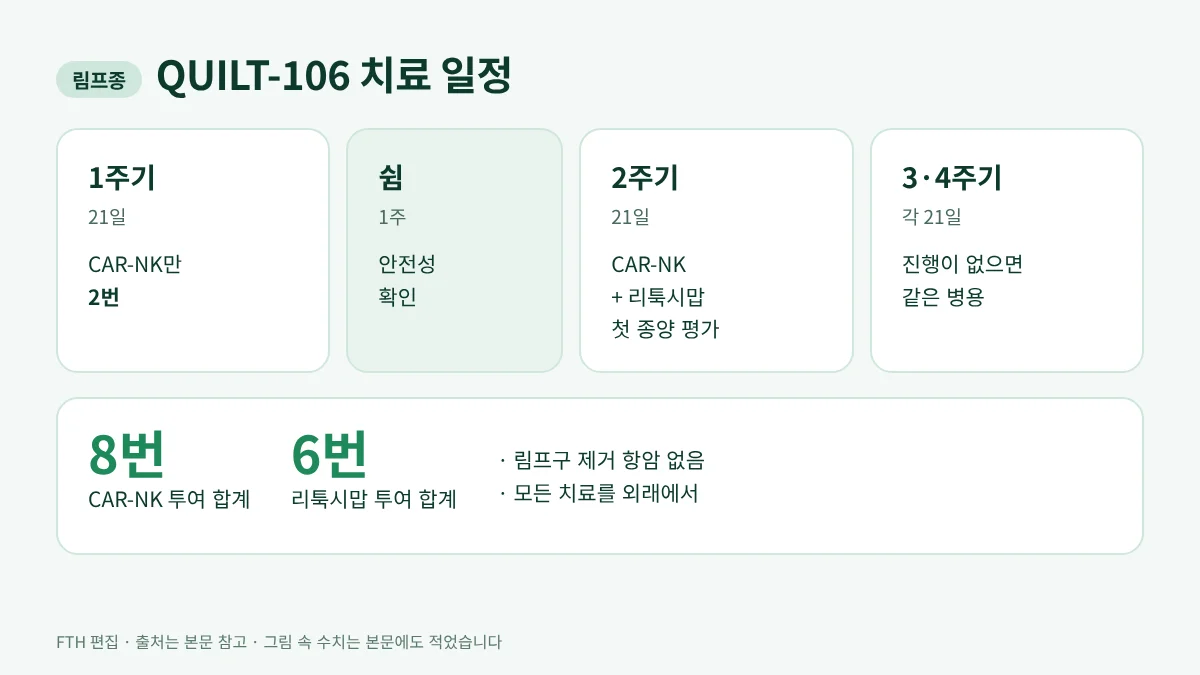
- Cycle 1 (21 days): two doses of CAR-NK alone
- Pause: one week for safety review
- Cycle 2: CAR-NK plus rituximab, then the first tumor assessment
- Cycles 3 and 4: the same combination for two more cycles if the disease has not progressed
- Total: 8 CAR-NK doses and 6 rituximab doses, all outpatient, with no lymphodepleting chemotherapy
What results did lymphoma patients have?
According to the January 16, 2026 report, all four patients with Waldenström lymphoma achieved disease control (100%). The two patients followed longest received no further therapy after four cycles and remained in complete remission at 7 and 15 months. One had multiple lymphoma lesions in the bones; the other had about 95% of the bone marrow replaced by lymphoma. Both reached complete remission after four cycles (Targeted Oncology, 2026-01-20).
| QUILT-106, Waldenström lymphoma | Result |
|---|---|
| Patients enrolled | 4 |
| Disease control | 4 (100%) |
| Complete remission in long-term follow-up | 2, ongoing at 7 and 15 months |
| Serious adverse events | None reported |
| Setting | All outpatient |
CAR cell therapies usually require lymphodepleting chemotherapy first. This is meaningful because durable complete remissions followed outpatient infusions alone. With four patients and no control group, a larger phase 2 trial will confirm response rates and duration.
Relapsed AML CAR-NK results: off-the-shelf SENTI-202 phase 1
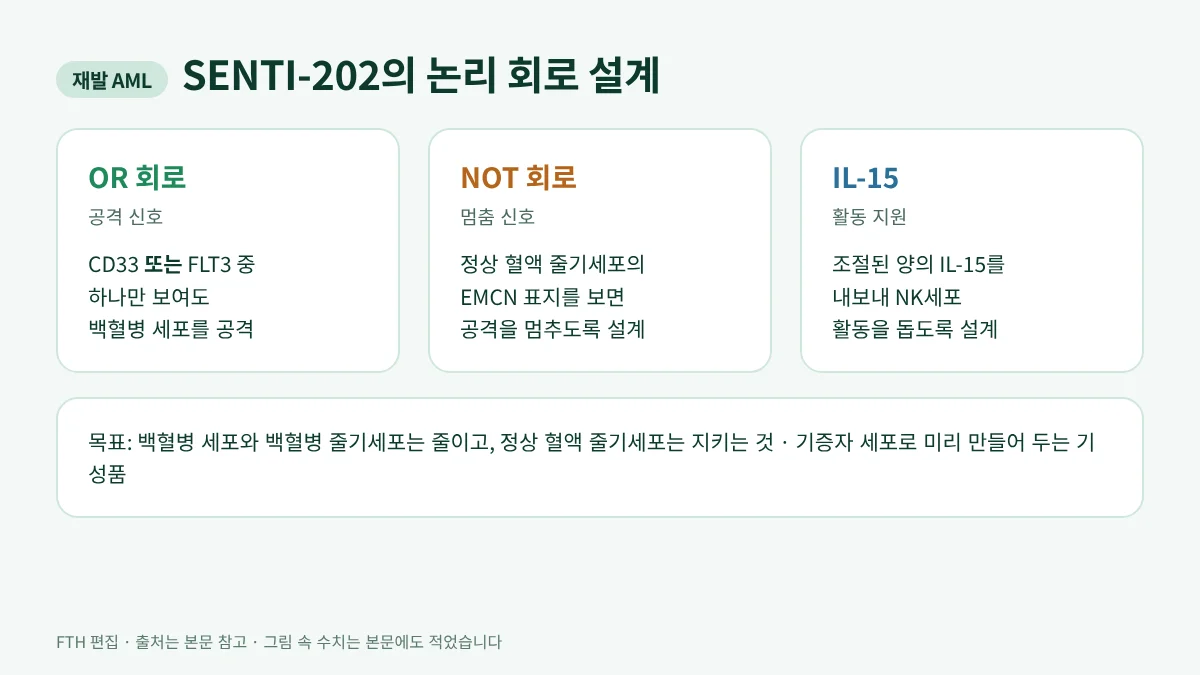
Options are limited when acute myeloid leukemia relapses or stops responding; the trial investigators noted that survival with existing treatment is often only a few months (Senti Biosciences release, 2025-12-09). SENTI-202, from Senti Biosciences, is an off-the-shelf CAR-NK made from donor cells, and it carries built-in logic gates.
- OR gate: attacks leukemia cells that carry either CD33 or FLT3
- NOT gate: designed to stop the attack when it sees EMCN (endomucin) on healthy blood stem cells
- IL-15: releases calibrated IL-15 to support NK cell activity
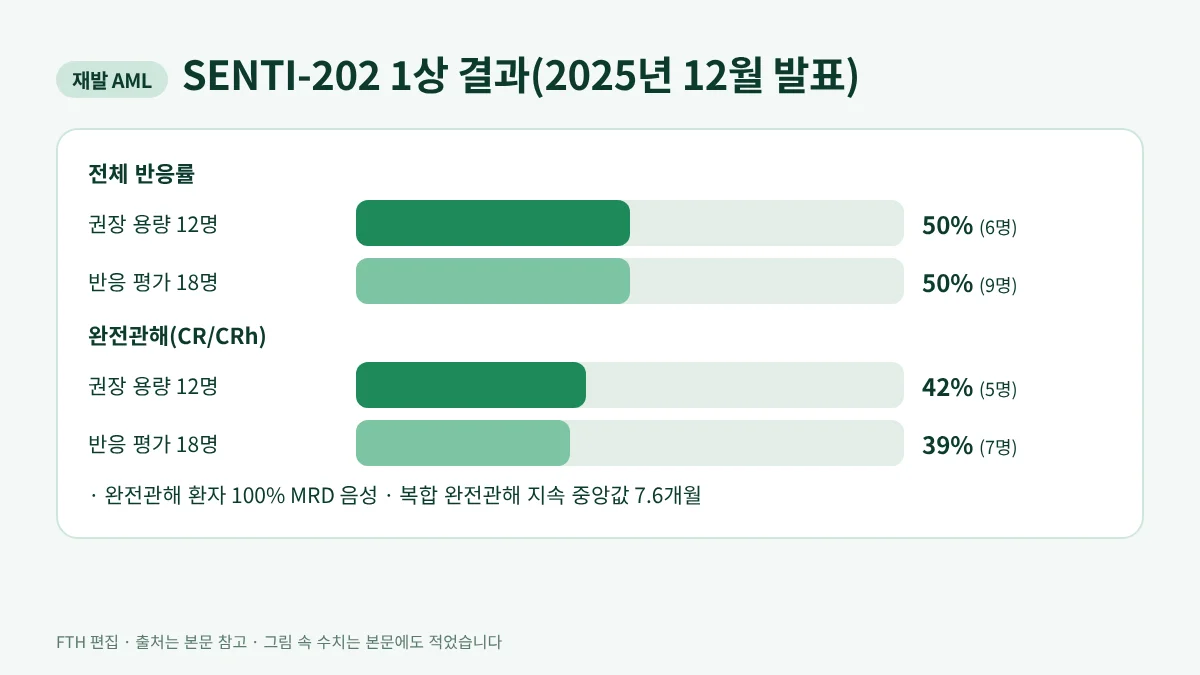
The phase 1 trial (SENTI-202-101, NCT06325748) is an open-label, multicenter study with no control group. Patients received fludarabine and cytarabine lymphodepletion before SENTI-202. The oral presentation at ASH on December 8, 2025 (Farhadfar et al., Blood 146 Suppl 1:1044) included 20 patients, 18 evaluable for response. Sixty-five percent had adverse-risk genetics at diagnosis, the median number of prior therapies was two, and median bone marrow blasts were 35%.
| Measure (December 2025) | Recommended dose, 12 | All evaluable, 18 |
|---|---|---|
| Overall response rate | 50% (6) | 50% (9) |
| Complete remission (CR/CRh) | 42% (5) | 39% (7) |
| MRD negativity among CRs | 100% | |
| Median duration of composite CR | 7.6 months (all patients, Kaplan-Meier estimate) | |
| Longest response | Over 1 year and ongoing | |
Source: Senti Biosciences release (2025-12-09). MRD-negative means sensitive testing found residual leukemia below the threshold.
On May 14, 2026, the developer reported seven more months of follow-up (Senti Biosciences release, 2026-05-14). The full phase 1 enrolled 22 patients; everyone in complete remission at the earlier data cut remained in remission, and the longest response exceeded 21 months. In a post hoc exploratory analysis, among 14 patients who received product made from donors with a specific attribute (Donor X) in cycle 1, 8 (57%) responded and 7 (50%) reached composite complete remission. About 50% of adult donors carry this attribute, and all future manufacturing will use such donors. Across all recommended-dose patients regardless of donor, the response rate was 44% and composite complete remission 37.5%.
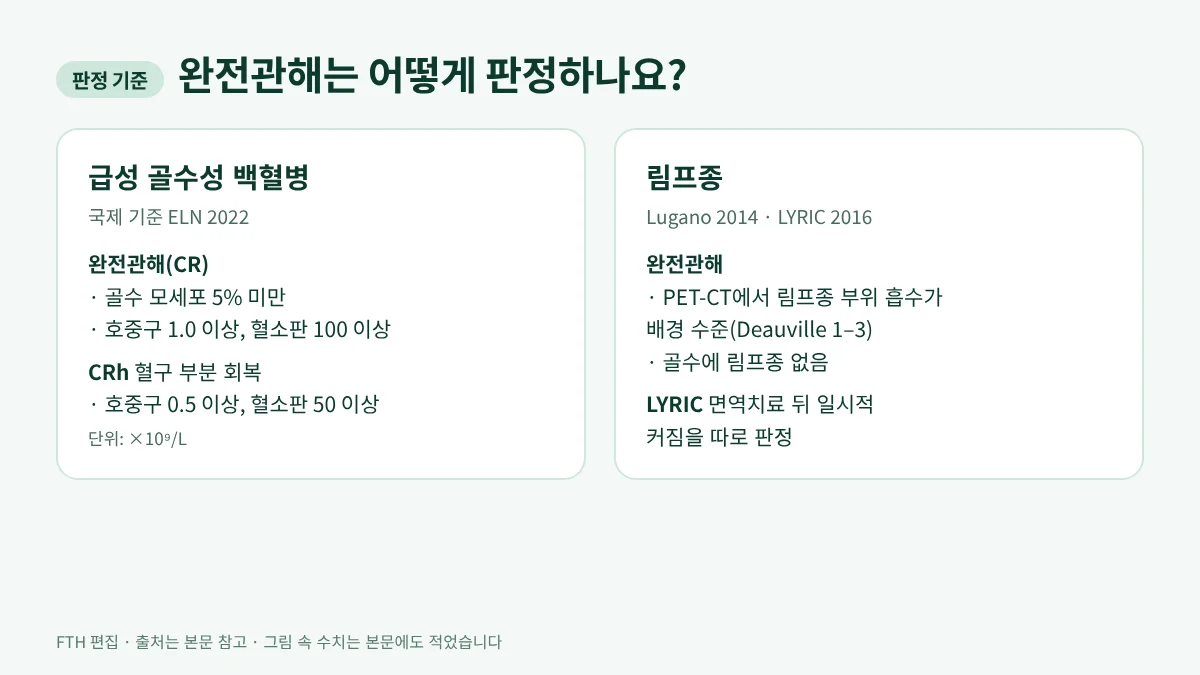
How is complete remission judged in CAR-NK results?
Both trials use the term complete remission, but the criteria differ by disease. Knowing them makes the numbers easier to read.
Complete remission in AML (ELN 2022)
The 2022 European LeukemiaNet recommendations (Döhner et al., Blood 2022;140(12):1345–1377) use these definitions.
- Complete remission (CR): bone marrow blasts below 5%, no circulating blasts or extramedullary disease, neutrophils at least 1.0×10⁹/L and platelets at least 100×10⁹/L
- CRh (partial hematologic recovery): same criteria but neutrophils at least 0.5×10⁹/L and platelets at least 50×10⁹/L
- MRD negativity: sensitive testing shows residual leukemia below the threshold
Complete remission in lymphoma (Lugano and LYRIC)
Under the Lugano classification (Cheson et al., J Clin Oncol 2014;32(27):3059–3067), complete remission means PET-CT uptake in lymphoma sites falls to Deauville score 1–3 (at or below liver uptake) and the marrow is free of lymphoma. QUILT-106 assesses best response with LYRIC (Cheson et al., Blood 2016;128(21):2489–2496), a refinement of Lugano that handles temporary lesion growth after immunotherapy separately.
What side effects were reported with CAR-NK therapy?
- QUILT-106: no serious adverse events reported as of January 2026; all treatment was outpatient.
- SENTI-202: no dose-limiting toxicities, no SENTI-202-related serious adverse events, and no adverse events leading to discontinuation. Grade 3 or higher events were mostly low blood counts; the developer reported them as unrelated to SENTI-202 and typical of lymphodepleted patients with relapsed AML. The most common related side effect was grade 1–2 fever, which resolved with standard care.
- Cytokine release syndrome: the review above notes no grade 3 or higher cytokine release syndrome with SENTI-202, limited to grade 1–2 fever.
Both trials are small, so rarer side effects will be studied in larger trials. If fever or signs of infection appear during treatment, patients should contact their care team promptly.
Where can patients receive CAR-NK therapy?
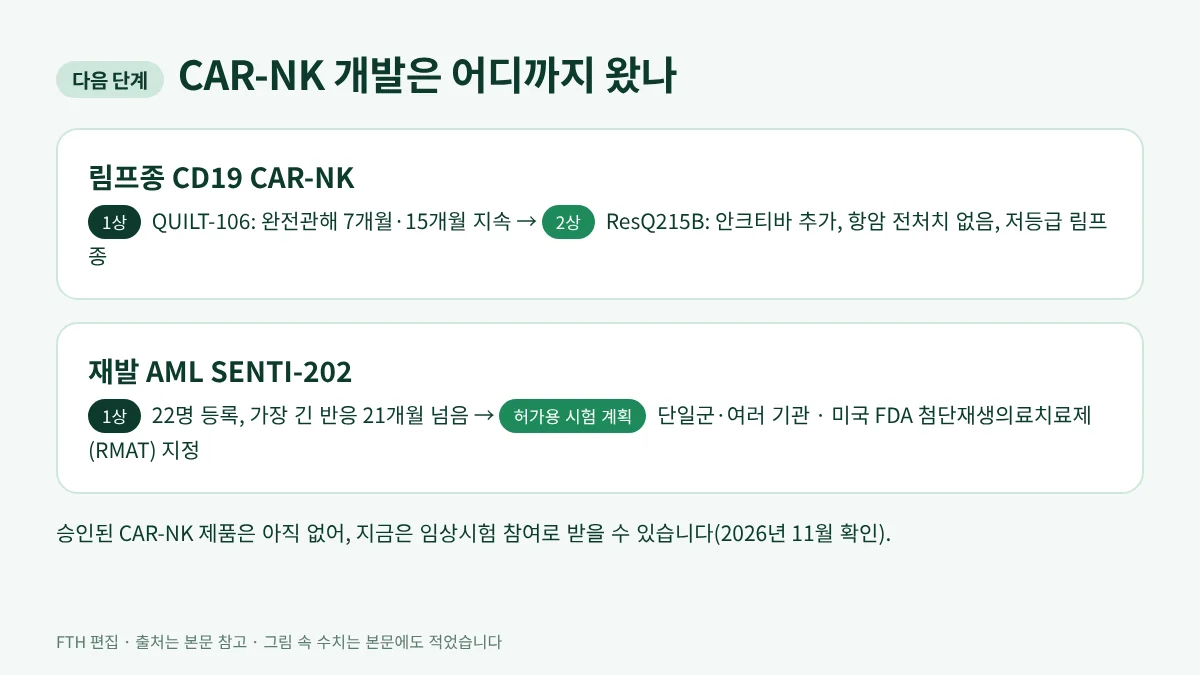
The U.S. FDA list of approved cellular and gene therapy products (updated October 30, 2026) does not yet include any CAR-NK or NK cell product. Today CAR-NK is available through clinical trials, and both programs are moving forward.
- Lymphoma: On February 2, 2026, ImmunityBio announced the phase 2 ResQ215B trial, adding the IL-15 agonist Anktiva (nogapendekin alfa inbakicept) to CD19 CAR-NK and rituximab, again outpatient and without conditioning chemotherapy. It enrolls adults with relapsed or refractory CD19- and CD20-positive indolent B-cell lymphoma after at least two prior lines, including follicular lymphoma and Waldenström lymphoma (CancerNetwork, 2026-02-03). Anktiva was first approved for bladder cancer; see Anktiva bladder cancer approval.
- Relapsed AML: SENTI-202 received U.S. Orphan Drug Designation in June 2025 and Regenerative Medicine Advanced Therapy (RMAT) designation in December 2025. After its FDA meeting, the developer plans a single-arm, multicenter pivotal trial in relapsed or refractory AML.
- Japan: An investigator-initiated trial, started in 2021, of an iPS cell-derived CAR-NK-type product in Japan is summarized in CAR-NK vs CAR-T. NK cell culture therapy offered by clinics is different from CAR-NK (NK cell information).
What to check and ask your doctor
- Does my lymphoma or leukemia express markers such as CD19, CD20, CD33 or FLT3, and is this on my test report?
- Which approved treatments are available at my stage, and when could a clinical trial be considered?
- If a CAR-NK trial is available, what is its registration number, phase, and does it require conditioning chemotherapy?
- Can I be treated as an outpatient during the trial, or will I need a hospital stay?
- Whom do I contact if I develop fever or signs of infection?
Frequently asked questions (FAQ)
Are CAR-NK therapy results better than CAR-T?
No trial has compared them directly, so neither can be called better. CAR-NK can be made in advance from donor cells, and severe cytokine release syndrome has been rare in trials so far. See CAR-NK vs CAR-T for details.
Does CAR-NK therapy need conditioning chemotherapy?
It depends on the trial. QUILT-106 for lymphoma used no conditioning and was given as outpatient care, while SENTI-202 for relapsed AML followed fludarabine and cytarabine conditioning.
Does complete remission mean treatment is over?
Complete remission means cancer is not detected on the specified tests. How long it lasts is checked with regular follow-up; the 7- and 15-month remissions in QUILT-106 and the response of more than 21 months with SENTI-202 come from such follow-up.
Can I receive CAR-NK therapy now?
As of November 2026, no CAR-NK product appears on the U.S. FDA approved list, so access is through clinical trials. Eligibility and sites can be checked by registration number on registries such as ClinicalTrials.gov.
Sources
- OnClive — Allogeneic CD19 CAR NK-cell therapy induces durable disease control in Waldenström lymphoma (2026-01-16)
onclive.com
Checked: 2026-11-17 - Targeted Oncology — CD19 CAR-NK cell therapy yields complete responses in Waldenström NHL (2026-01-20)
targetedonc.com
Checked: 2026-11-17 - ClinicalTrials.gov — NCT06334991, phase 1 study of CD19 t-haNK with rituximab in relapsed/refractory B-cell NHL (QUILT-106)
clinicaltrials.gov
Checked: 2026-11-17 - CancerNetwork — Phase 2 trial will evaluate CD19 t-haNK combo in indolent lymphomas (ResQ215B, 2026-02-03)
cancernetwork.com
Checked: 2026-11-17 - Farhadfar N, Strickland S, Bajel A, et al. Promising results from an ongoing phase I multicenter study of SENTI-202 in adults with relapsed/refractory AML. Blood 2025;146(Suppl 1):1044
doi.org/10.1182/blood-2025-1044
Checked: 2026-11-17 - Senti Biosciences — Updated SENTI-202 clinical data from ongoing phase 1 trial in R/R AML (ASH 2025, 2025-12-09)
sec.gov
Checked: 2026-11-17 - Senti Biosciences — Positive FDA RMAT meeting on registrational strategy and efficacy/durability updates for SENTI-202 (2026-05-14)
biospace.com
Checked: 2026-11-17 - ClinicalTrials.gov — NCT06325748, SENTI-202-101 phase 1 study
clinicaltrials.gov
Checked: 2026-11-17 - Luo, Ding, Zhao. Preclinical and clinical studies on CAR-NK cell therapy: latest update from 2025 ASH Annual Meeting. Experimental Hematology & Oncology 2026;15:46
doi.org/10.1186/s40164-026-00780-6
Checked: 2026-11-17 - Döhner H, Wei AH, Appelbaum FR, et al. Diagnosis and management of AML in adults: 2022 recommendations from an international expert panel on behalf of the ELN. Blood 2022;140(12):1345–1377
doi.org/10.1182/blood.2022016867
Checked: 2026-11-17 - Cheson BD, Fisher RI, Barrington SF, et al. The Lugano classification. J Clin Oncol 2014;32(27):3059–3067
doi.org/10.1200/JCO.2013.54.8800
Checked: 2026-11-17 - Cheson BD, Ansell S, Schwartz L, et al. Refinement of the Lugano classification lymphoma response criteria in the era of immunomodulatory therapy. Blood 2016;128(21):2489–2496
doi.org/10.1182/blood-2016-05-718528
Checked: 2026-11-17 - U.S. FDA — Approved Cellular and Gene Therapy Products (content current as of 2026-10-30)
fda.gov
Checked: 2026-11-17
Written by the FTH editorial team, sources checked 2026-11-17 · Medical review: none
This article is general information based on public sources and does not replace diagnosis or treatment. Please discuss treatment decisions with your care team.