
Phase 1/2 trial — anal cancer oncolytic virus pelareorep, GOBLET anal cancer cohort (single arm, no control group, EudraCT 2020-003996-16) · U.S. FDA Fast Track designation, July 2026 · Investigational, not yet approved
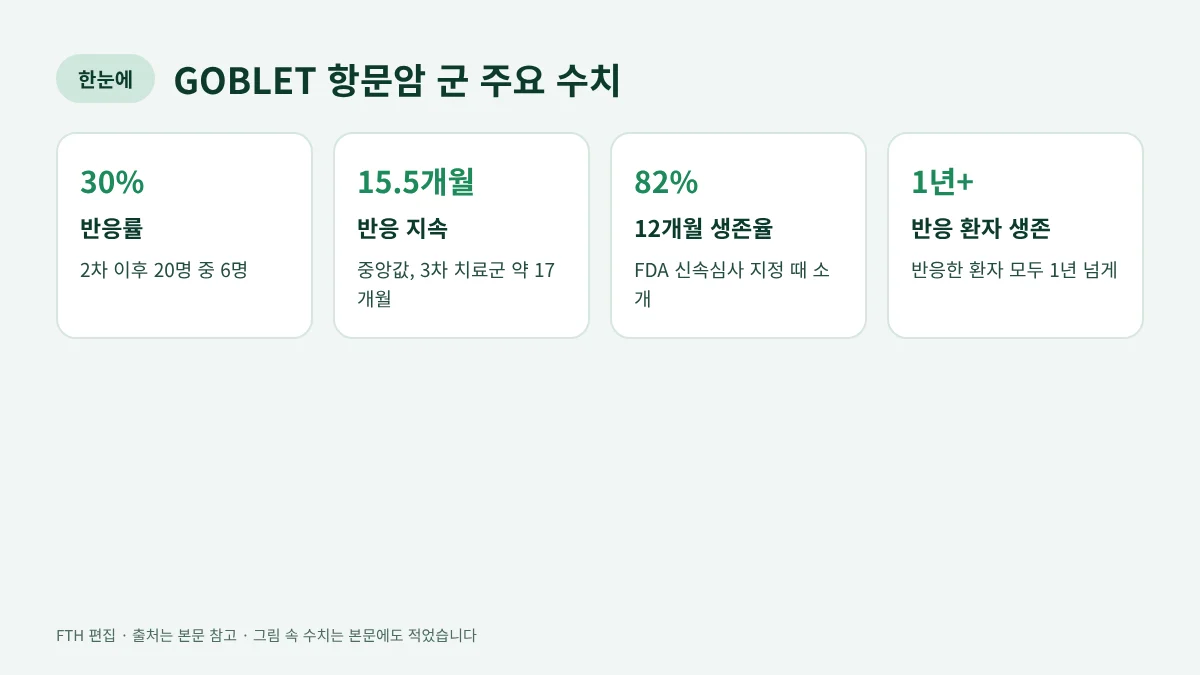
The anal cancer oncolytic virus pelareorep, given with the immunotherapy atezolizumab in the phase 1/2 GOBLET study, shrank tumors in 6 of 20 patients (30%) with squamous cell anal carcinoma that had progressed after chemotherapy, and responses lasted a median of 15.5 months (Oncolytics Biotech, 2025-10-28). In an October 2026 update, every responder was alive beyond one year and several passed two years (Targeted Oncology, 2026-10-28). These are small results without a control group; the U.S. FDA granted pelareorep combined with a checkpoint inhibitor Fast Track designation in July 2026.
Key points at a glance:
- Who: squamous cell anal carcinoma that progressed after chemotherapy (second line or later)
- Treatment: intravenous oncolytic virus pelareorep plus the immunotherapy atezolizumab
- Response: 6 of 20 patients (30%); 4 of 14 third-line patients (about 29%) — release, report
- Durability: median duration of response 15.5 months; about 17 months in third line — release, report
- Survival: all responders alive beyond one year; 12-month survival 82% — report, report
- Stage: phase 1/2 single-arm study; pelareorep combined with a checkpoint inhibitor received U.S. FDA Fast Track in July 2026 — report
What is pelareorep, the anal cancer oncolytic virus?
An oncolytic virus multiplies inside cancer cells, breaks them apart and, in the process, wakes up the body's immune system. Pelareorep is made from a reovirus and can be given by intravenous infusion, so it reaches tumors throughout the body. It is described as replicating selectively in tumor cells, increasing inflammatory signals and drawing lymphocytes into the tumor (Targeted Oncology, 2026-07-21).
Its partner drug, atezolizumab (Tecentriq), blocks PD-L1 on cancer cells and releases a brake on immune cells. The idea is that the virus turns an immunologically "cold" tumor "hot", and the checkpoint inhibitor keeps the attack going. For how oncolytic viruses work and which ones are approved, see our oncolytic virus therapy guide.
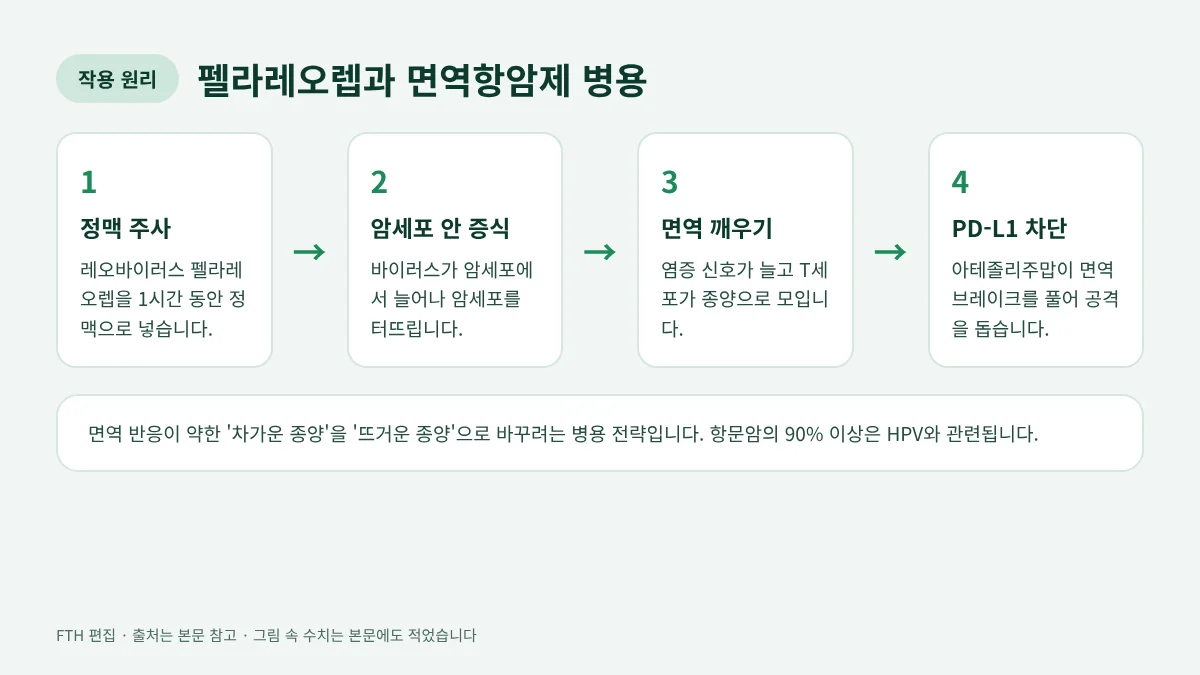
In words, the steps in the figure are:
- Pelareorep is infused intravenously over one hour.
- The virus multiplies inside cancer cells and breaks them down.
- Inflammatory signals rise and lymphocytes such as T cells gather in the tumor.
- Atezolizumab blocks PD-L1 so the immune attack can continue.
More than 90% of anal cancers are linked to human papillomavirus (HPV) (Targeted Oncology, 2026-10-28). Virus-related cancers carry targets that immune cells can recognize, and the company also plans to test the same combination in HPV-related head and neck cancer.
Current treatment for recurrent anal cancer
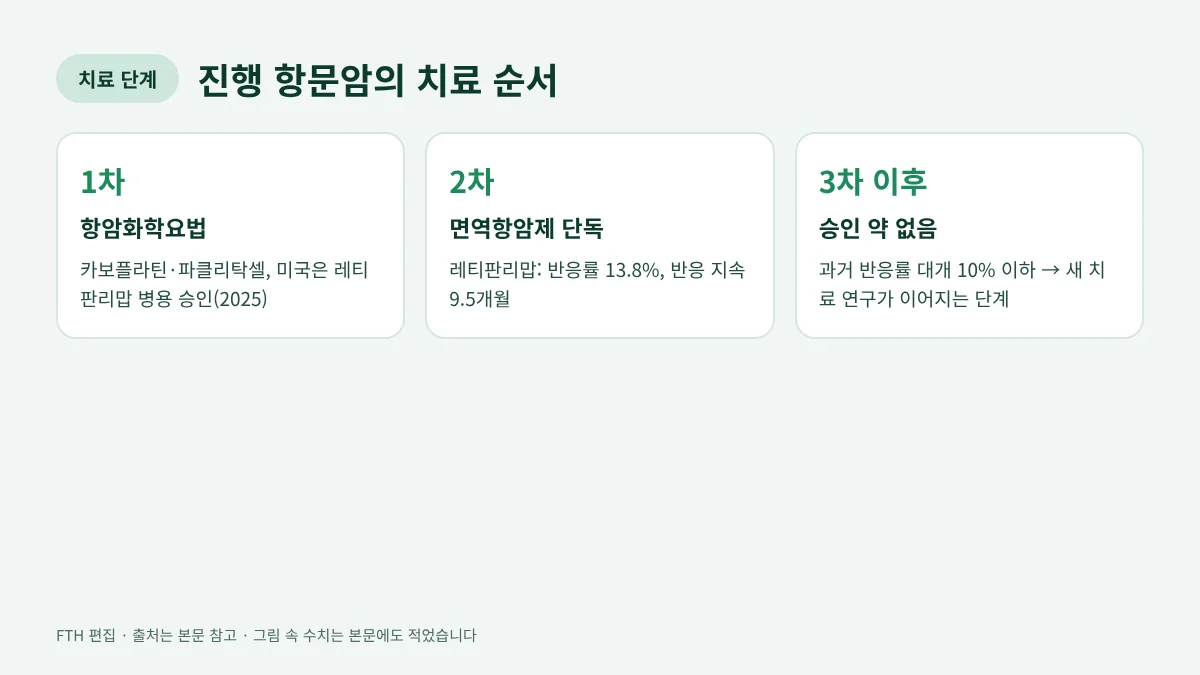
Metastatic or inoperable squamous cell anal carcinoma is first treated with carboplatin and paclitaxel chemotherapy. In May 2025 the U.S. FDA approved the immunotherapy retifanlimab (Zynyz) with this chemotherapy as first-line treatment, and alone for patients whose disease progressed after platinum chemotherapy (U.S. FDA).
In POD1UM-202, the phase 2 trial behind single-agent retifanlimab, 13.8% of 94 patients responded and the median duration of response was 9.5 months (Rao et al., ESMO Open 2022). No drug is approved in the United States for the third-line setting, where historical response rates are usually described as 10% or lower (Targeted Oncology, 2026-01-20).
| Line | U.S.-approved treatment | Reference figures |
|---|---|---|
| First line | Carboplatin, paclitaxel, plus retifanlimab (approved 2025) | Chemotherapy-based |
| Second line (after platinum) | Retifanlimab alone | Response 13.8%, duration 9.5 months |
| Third line and later | None approved | Historical response usually 10% or lower |
Sources: U.S. FDA (2025-05), Rao et al., ESMO Open 2022;7(4):100529, Targeted Oncology (2026-01-20).
Who took part in the GOBLET study?
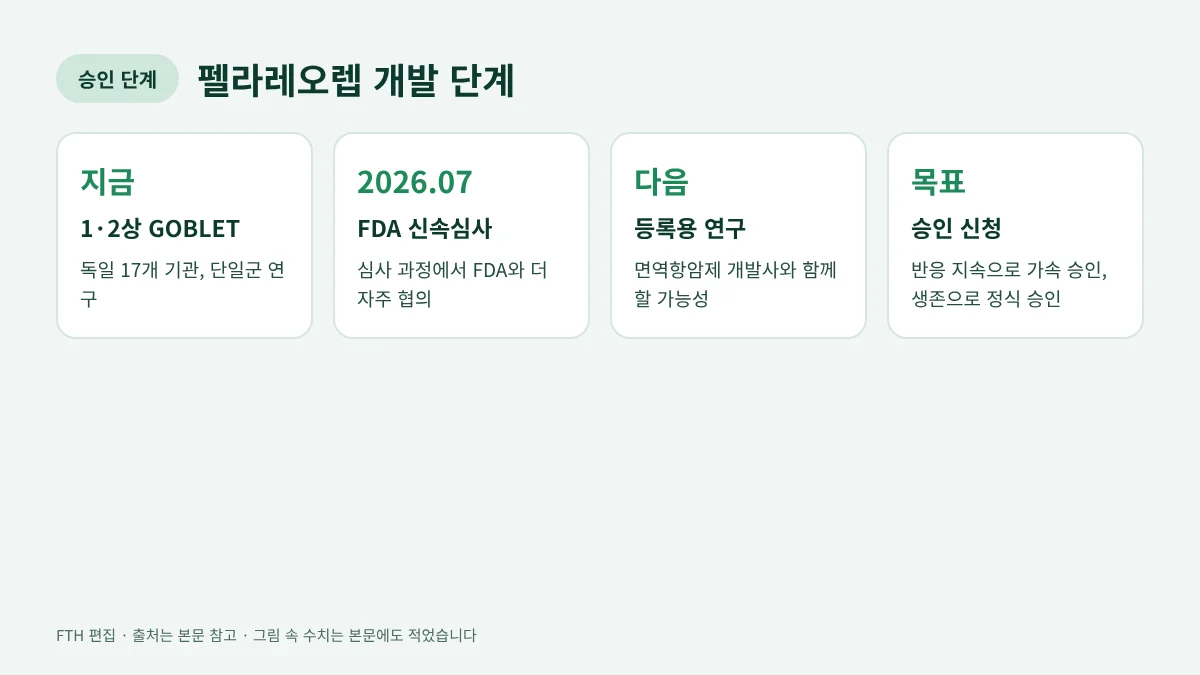
GOBLET is a phase 1/2 study that looks at several digestive cancers, including pancreatic, colorectal and anal cancer, as separate cohorts under one protocol. Seventeen centers in Germany take part, and the German oncology research group AIO-Studien-gGmbH runs it (Oncolytics Biotech). Cohort 4, which enrolled anal cancer patients, has no randomization. Everyone received the same combination, so there is no group treated differently at the same time, and the results are read against historical figures from other studies.
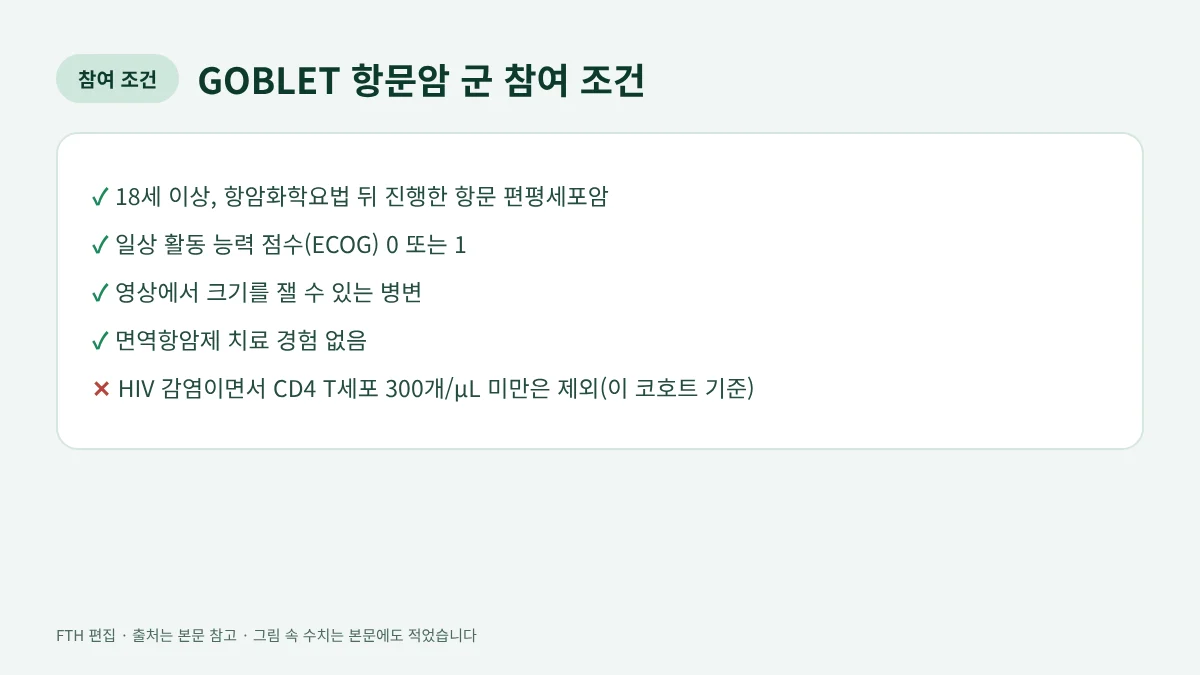
Eligibility at a glance
- Age 18 or older with advanced or metastatic squamous cell anal carcinoma that progressed on, or could not tolerate, chemotherapy
- ECOG performance status 0 or 1
- A lesion measurable on imaging
- No prior checkpoint inhibitor
- Excluded: HIV infection with a CD4 T-cell count below 300 cells/µL (cohort 4 criterion)
These criteria are summarized from CancerNetwork (2025-10-29) and OncLive (2026-10-28). Excluding patients who already had a checkpoint inhibitor means the study looks at the virus combination in people new to immunotherapy.
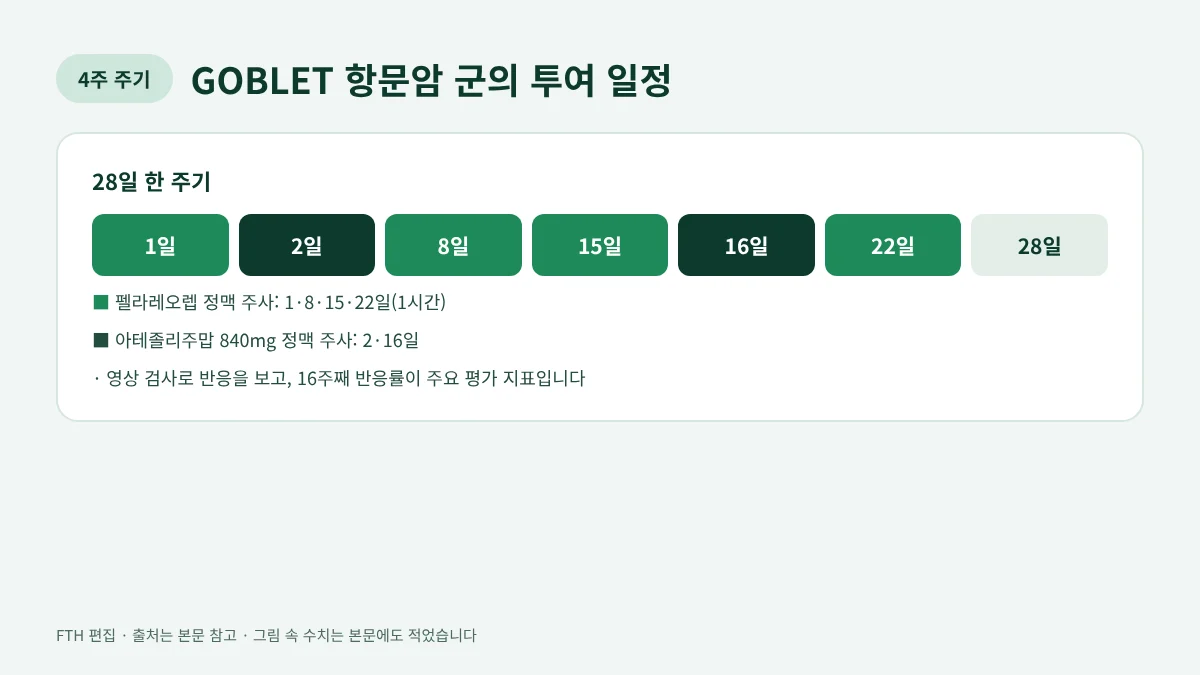
In each 28-day cycle, pelareorep 4.5×10¹⁰ TCID50 was infused over one hour on days 1, 8, 15 and 22, and atezolizumab 840 mg was infused on days 2 and 16 (CancerNetwork, 2025-10-29). The primary endpoint was objective response rate at week 16 by imaging (RECIST 1.1) (OncLive, 2026-10-28).
Anal cancer oncolytic virus results: response rate and durability
First report: 12 patients, January 2025
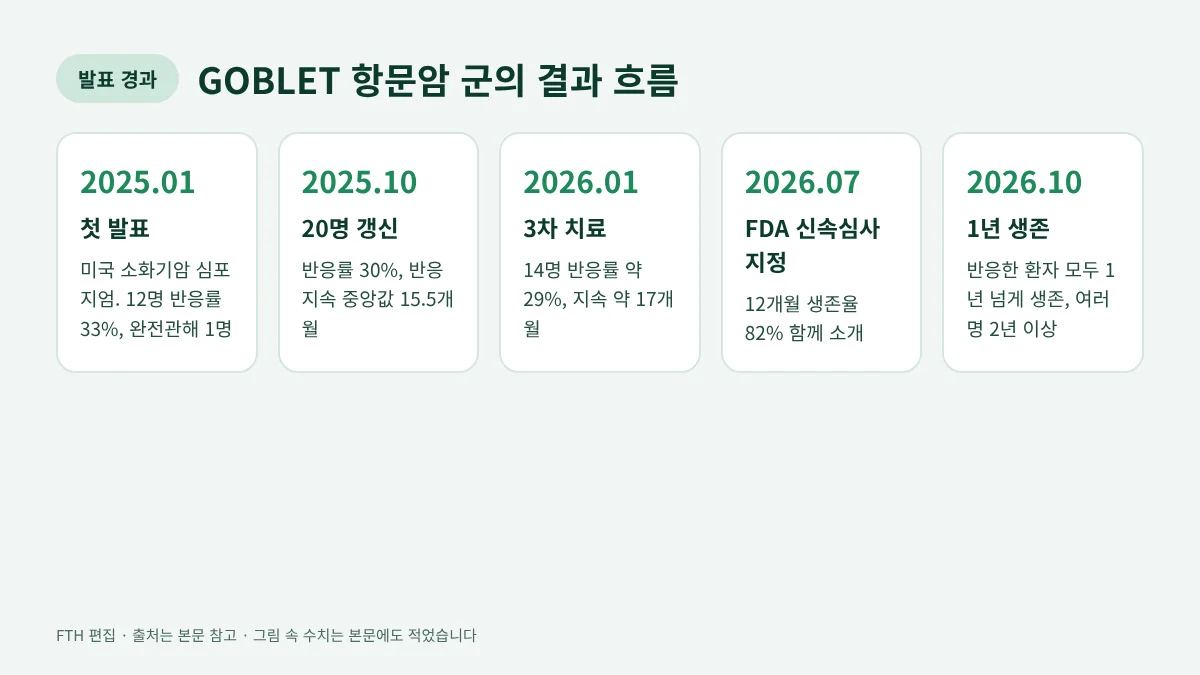
The first results were presented at the ASCO Gastrointestinal Cancers Symposium in January 2025, with a 33% response rate and one complete response among 12 patients (Modest et al., J Clin Oncol 2025, OncLive summary).
Results in 20 patients, second line or later
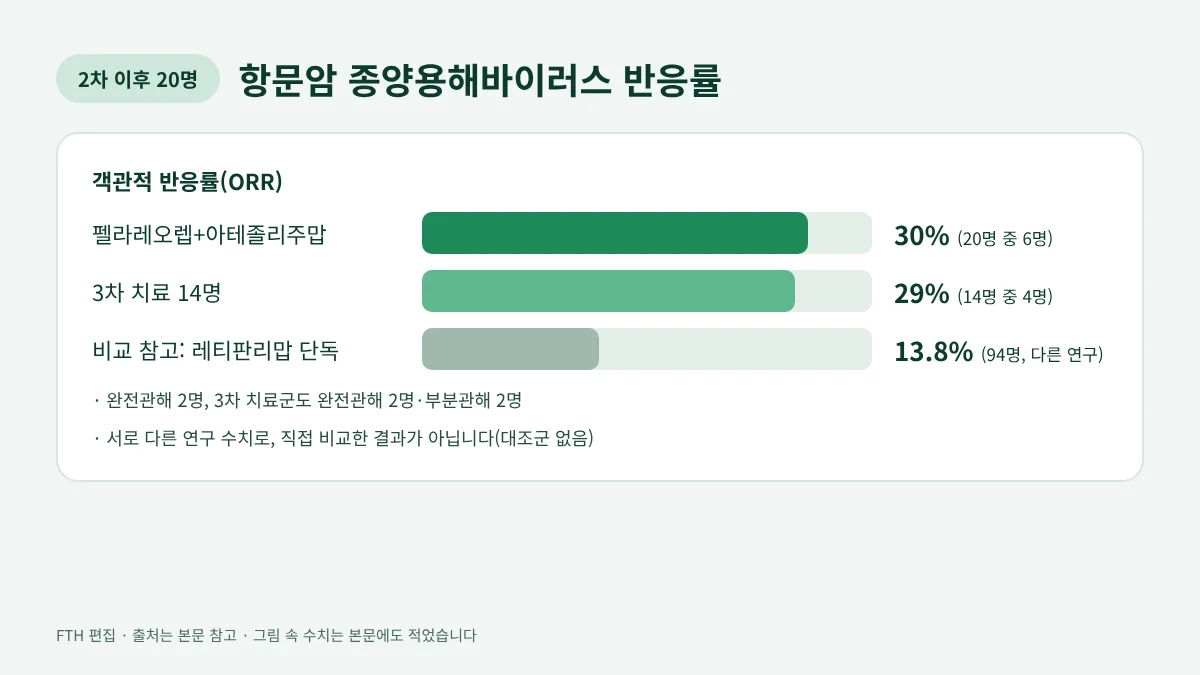
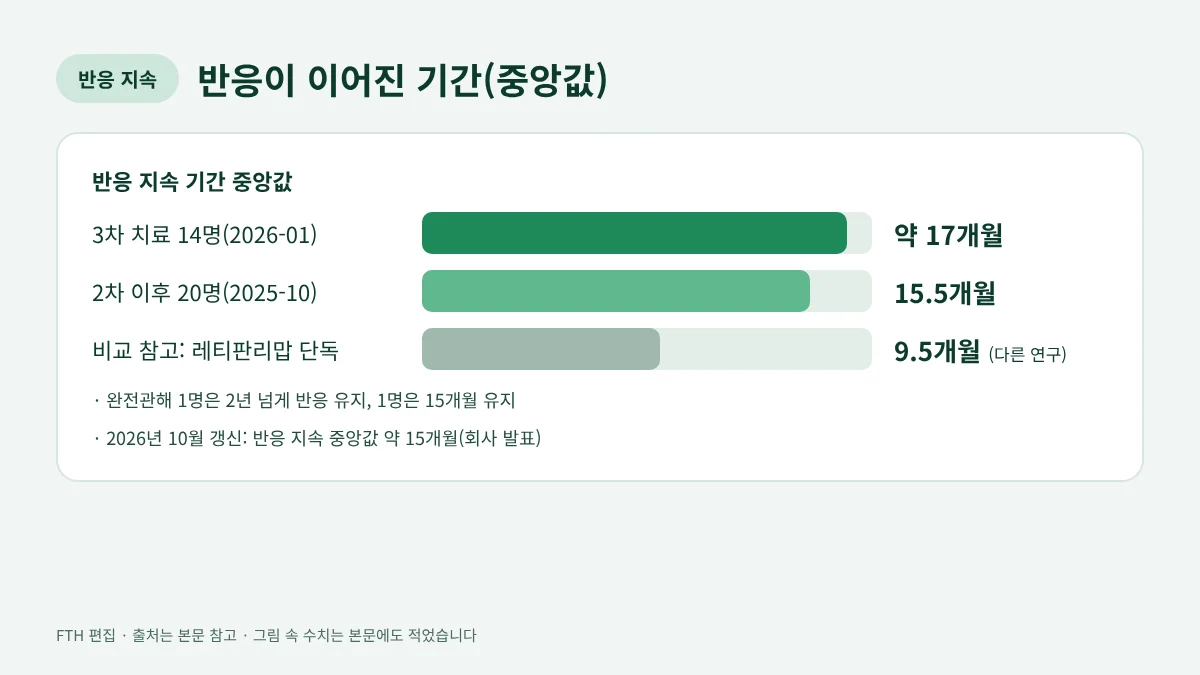
In the October 2025 update, 6 of 20 patients (30%) treated in the second line or later responded, including 2 complete responses in which the tumor disappeared on imaging. One complete response lasted beyond two years and another for 15 months, and a third patient was still responding at 64 weeks. The median duration of response was 15.5 months (Oncolytics Biotech, 2025-10-28).
Results in 14 third-line patients
In January 2026, patients in the third-line setting were analyzed separately. Of 14 evaluable patients, 4 (about 29%) responded (2 complete, 2 partial), with a median duration of response of about 17 months (Targeted Oncology, 2026-01-20).
| Report | Patients | Response rate | Complete responses | Median duration |
|---|---|---|---|---|
| January 2025 | 12, second line or later | 33% | 1 | Not reported |
| October 2025 | 20, second line or later | 30% (6) | 2 | 15.5 months |
| January 2026 | 14, third line | About 29% (4) | 2 | About 17 months |
| October 2026 | Second line or later, update | Not reported | Not reported | About 15 months (company internal calculation) |
Sources: J Clin Oncol 2025;43(4 suppl):6, Oncolytics Biotech (2025-10-28), Targeted Oncology (2026-01-20), OncLive (2026-10-28). Response rate counts patients whose tumors shrank by 30% or more (partial response) or disappeared (complete response).
How to read the comparison with past figures
The company said the response rate was more than double the 13.8% seen with retifanlimab alone (Oncolytics Biotech). These figures come from different studies with possibly different patients. The company also notes that its comparison of duration of response (about 15 months versus 9.5 months) is not a head-to-head comparison (OncLive, 2026-10-28).
One-year survival with the anal cancer oncolytic virus combination
A July 2026 report on the Fast Track designation cited a 12-month overall survival rate of 82% with the combination (Targeted Oncology, 2026-07-21). For reference, median overall survival with retifanlimab alone in its phase 2 trial was 10.1 months (Rao et al., ESMO Open 2022) (different measures and studies, so they cannot be compared directly).
According to reports on the company's October 27, 2026 release, every responder was alive beyond one year and several had passed 24 months. Median overall survival has not been reached, meaning fewer than half of patients had died at the time of analysis (Targeted Oncology, 2026-10-28, OncLive, 2026-10-28).
What side effects were reported, and how are they managed?
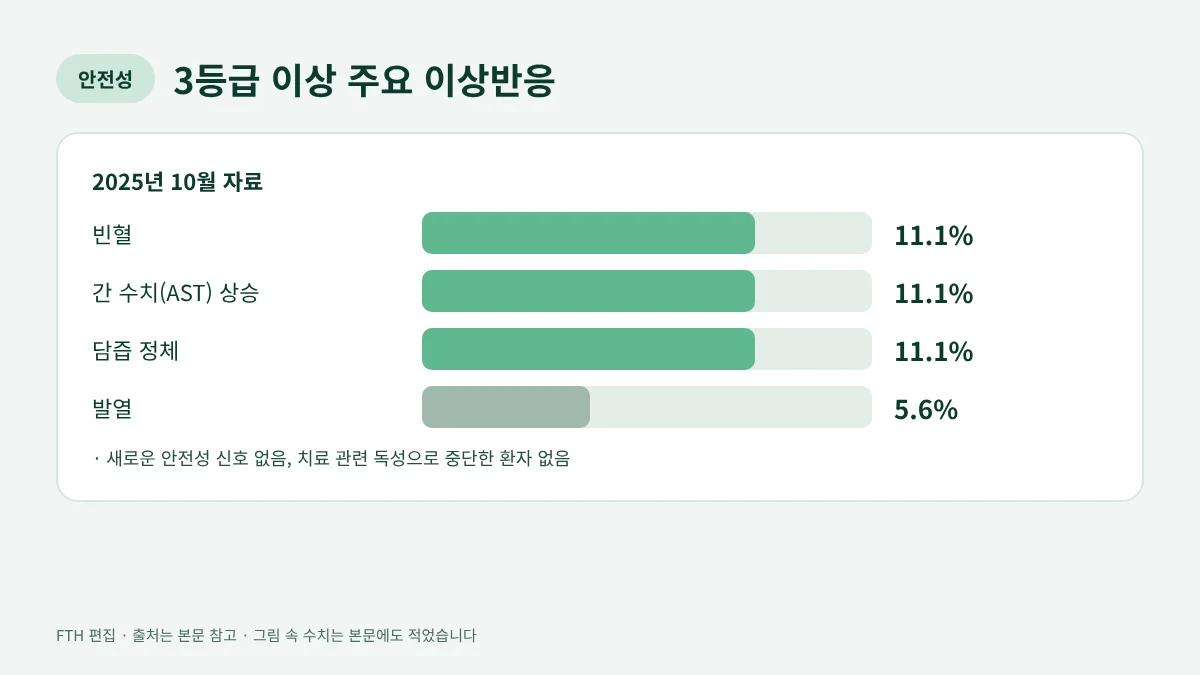
Grade 3 or higher adverse events
The main grade 3 or higher adverse events in the October 2025 data were as follows (CancerNetwork, 2025-10-29).
- Anemia 11.1%
- Raised liver enzyme AST 11.1%
- Cholestasis 11.1%
- Fever 5.6%
Overall safety was in line with what is known for atezolizumab, with no new safety signals, and no evaluable patient stopped treatment because of treatment-related toxicity (Targeted Oncology, 2026-07-21).
Care during treatment
During immunotherapy, blood counts and liver tests are checked regularly, and any fever should be reported to the care team promptly. Any new symptom during treatment should be reviewed with the treating doctors.
Approval status and where it is available
What Fast Track means
Pelareorep is an investigational drug that is not yet approved in any country. In July 2026 the U.S. FDA granted Fast Track designation to pelareorep combined with a checkpoint inhibitor for inoperable, locally recurrent or metastatic squamous cell anal carcinoma that progressed on, or could not tolerate, at least one prior systemic therapy (Targeted Oncology, 2026-07-21). Fast Track allows more frequent communication with the FDA during development and review; it is not an approval.
Next studies and how to check enrollment
After meeting with the FDA, the company plans further registration studies (possibly with a checkpoint inhibitor partner) and says that, subject to FDA agreement, durable responses could support accelerated approval and survival data could support full approval (OncLive, 2026-10-28). GOBLET was run in Germany, and a protocol amendment to add U.S. sites was submitted in September 2025 (OncLive, 2026-01). Whether new patients are being enrolled should be checked in the public trial registries of the study sites.
Recent results from other oncolytic viruses may also help. See new melanoma drug Tudriqev for melanoma after PD-1 therapy and bladder cancer virus therapy cretostimogene for phase 3 results in BCG-unresponsive bladder cancer.
Questions to ask your doctor about anal cancer oncolytic virus therapy
- Is my anal cancer an HPV-related squamous cell carcinoma, and which line of treatment am I in now?
- If I have already received a checkpoint inhibitor such as retifanlimab, would that exclude me from studies like GOBLET?
- Are there oncolytic virus or immunotherapy trials I could join?
- If I have HIV or an autoimmune disease, what treatments can be considered?
- How often will my blood counts and liver tests be checked during treatment?
Frequently asked questions
Can I get anal cancer oncolytic virus therapy now?
Pelareorep is investigational, so it is available only through clinical trials, not routine care. The U.S. FDA granted it Fast Track designation in July 2026, and the company is preparing registration studies (Targeted Oncology).
Is a 30% response rate high?
Retifanlimab alone, approved after platinum chemotherapy, had a 13.8% response rate in its trial (ESMO Open 2022). GOBLET's 30% is higher, but it comes from a different study of 20 patients without a control group, so larger studies are the next step (Oncolytics Biotech).
How is pelareorep given?
In GOBLET, pelareorep was infused over one hour four times per 28-day cycle (days 1, 8, 15 and 22), with atezolizumab 840 mg on days 2 and 16 (CancerNetwork). Unlike some oncolytic viruses, it is given intravenously rather than injected into the tumor.
How long do responses last?
The median duration of response was 15.5 months in 20 patients treated in the second line or later and about 17 months in 14 third-line patients (Oncolytics Biotech, Targeted Oncology). In the October 2026 update, every responder was alive beyond one year (Targeted Oncology).
Sources
- Targeted Oncology — Pelareorep plus atezolizumab shows durability, survival at 1 year in anal cancer (2026-10-28)
targetedonc.com
Checked: 2026-11-21 - OncLive — Pelareorep plus atezolizumab generates durable responses in previously treated SCAC (2026-10-28)
onclive.com
Checked: 2026-11-21 - Targeted Oncology — FDA grants pelareorep fast track designation in advanced anal cancer (2026-07-21)
targetedonc.com
Checked: 2026-11-21 - Oncolytics Biotech — Updated anal cancer data showing objective response rate more than double the current standard of care (2025-10-28)
ir.oncolyticsbiotech.com
Checked: 2026-11-21 - Targeted Oncology — Pelareorep combo drives durable responses in third-line metastatic anal cancer (2026-01-20)
targetedonc.com
Checked: 2026-11-21 - Modest DP, Goekkurt E, Heineman TC, et al. GOBLET platform study: Preliminary safety and tumor response results for the relapsed anal carcinoma cohort in patients treated with pelareorep and atezolizumab. J Clin Oncol 2025;43(4 suppl):6 (ASCO GI 2025)
doi.org/10.1200/JCO.2025.43.4_suppl.6
Checked: 2026-11-21 - Rao S, Anandappa G, Capdevila J, et al. A phase II study of retifanlimab (INCMGA00012) in patients with squamous carcinoma of the anal canal who have progressed following platinum-based chemotherapy (POD1UM-202). ESMO Open 2022;7(4):100529
doi.org/10.1016/j.esmoop.2022.100529
Checked: 2026-11-21 - U.S. FDA — FDA approves retifanlimab-dlwr with carboplatin and paclitaxel and as a single agent for squamous cell carcinoma of the anal canal (2025-05)
fda.gov
Checked: 2026-11-21 - CancerNetwork — Pelareorep combo yields responses in squamous cell anal carcinoma (2025-10-29)
cancernetwork.com
Checked: 2026-11-21 - OncLive — Pelareorep plus atezolizumab drives responses in third-line squamous cell anal carcinoma (2026-01)
onclive.com
Checked: 2026-11-21
Written by the FTH editorial team, sources checked 2026-11-21 · Medical review: none
This article is general information based on public sources and does not replace diagnosis or treatment. Please discuss treatment decisions with your care team.