Same name “photoimmunotherapy”, not the same treatment
Gan Chuo Clinic’s “cancer photoimmunotherapy” and the head and neck cancer treatment approved in Japan use different drugs. Here is how to tell them apart.
Read moreThe actual drugs and device behind what the clinic calls “photoimmunotherapy”, with approval status and cost separated.
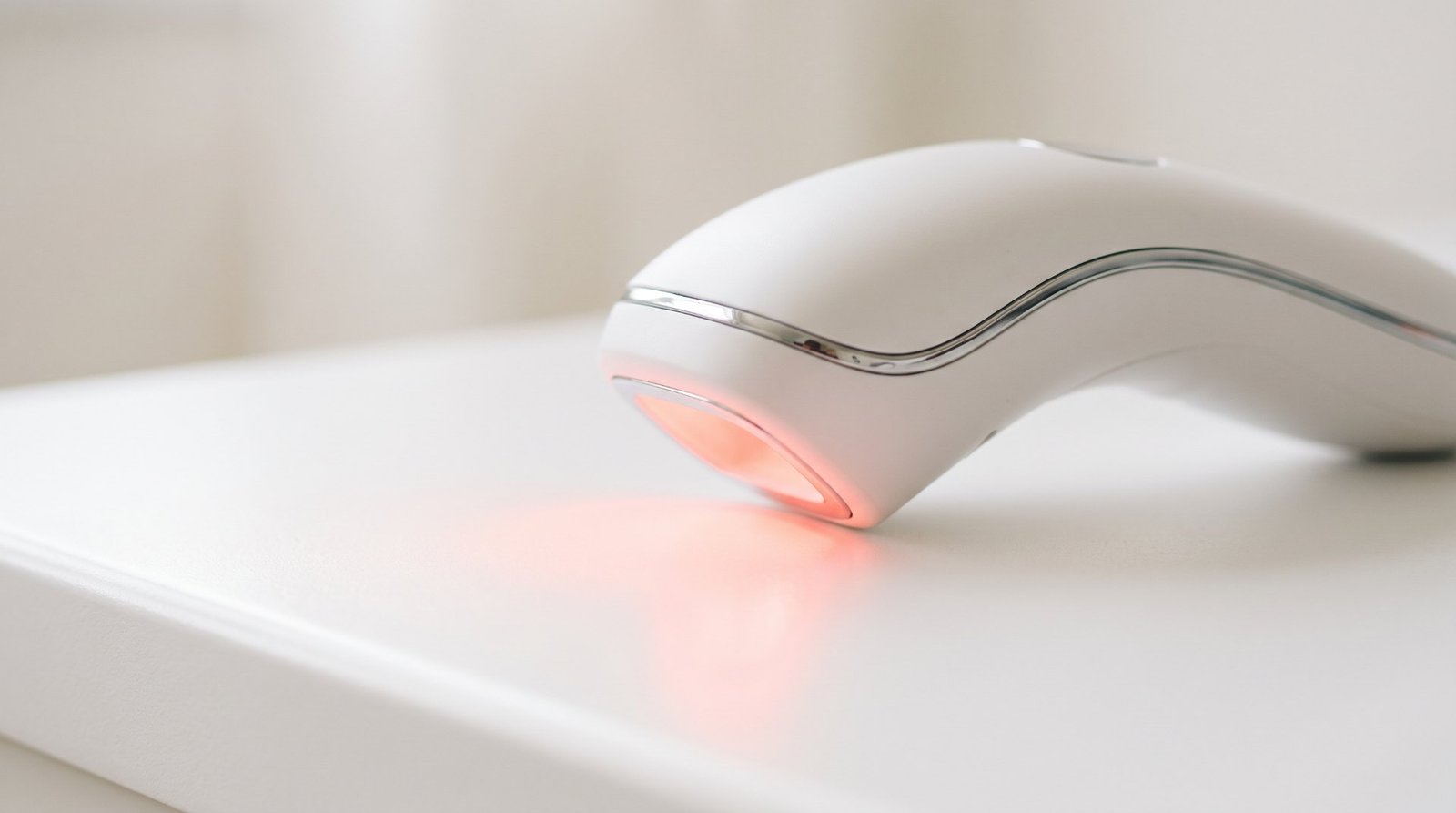
Illustrative image
Gan Chuo Clinic Group uses the name “cancer photoimmunotherapy” for a method combining the near-infrared device Super Lizer EX with ICG liposomes and talaporfin liposomes. The clinic states that the method includes drugs or devices not approved in Japan and is not covered by public insurance. Its name resembles a head and neck cancer treatment that received conditional early approval in Japan, but no basis was found for treating them as the same therapy.
Photodynamic therapy (PDT) is a general term for treatments in which a light-sensitive drug is given and then activated by light of a specific wavelength.
The name “photoimmunotherapy” may refer to different drugs and methods at different institutions. Do not assume two treatments are the same by name; confirm the drug, device and approval status.
Approved PDT-related drugs in Japan as listed by the source: porfimer sodium (1994), talaporfin sodium (2003), and cetuximab sarotalocan sodium (conditional early approval in 2020 for unresectable locally advanced or locally recurrent head and neck cancer).
Institution’s description
| Item | Details |
|---|---|
| Approval status | Institution’s description The clinic states that procedures using drugs or devices unapproved in Japan are included. |
| Public insurance | Institution’s description Not covered (self-pay). |
| Cost | Institution’s description ¥2,200,000 per course (five visits, about one month), tax included; the same per subsequent course. Amount as posted by the clinic on the check date. |
| Similarly named approved therapy | Authoritative source A head and neck cancer treatment using cetuximab sarotalocan sodium received conditional early approval in 2020. It uses a different drug from the clinic’s method. |
| Advanced Medical Care status | Not confirmed No information confirmed that this method falls under Advanced Medical Care. |
| Evidence of effect | Limited evidence / research stage Beyond the clinic’s description, no published clinical trial results for this method were confirmed in this check. |
External medical institutions are shown only as information sources; nothing on this site is an advertisement for, or recommendation of, any institution or treatment.
FTH is not a medical institution; it is a company that provides guidance on overseas medical information, translation, and on-site interpretation support. The content of this site is for informational purposes only and does not constitute a diagnosis or treatment recommendation for any individual, nor a guarantee of treatment results. Please discuss the suitability, risks and decision to undergo any treatment with your attending medical team.
Gan Chuo Clinic’s “cancer photoimmunotherapy” and the head and neck cancer treatment approved in Japan use different drugs. Here is how to tell them apart.
Read more
Accurate interpretation needs preparation. How to organize documents, questions and terminology in advance.
Read moreWe can confirm the scope of source-document translation and interpretation for clinic visits. Treatment suitability is decided by the attending medical team.